

This post was originally published on this site.
Vanessa ClarkeEducation reporter

The government has promised to create 50,000 more places for children with special educational needs (Send) in mainstream schools in England.
It plans to invest £3bn over the next three years, partly funded by cancelling the building of some planned free schools.
Councils – who will receive the funding – have argued the money needs to be diverted to the right areas and to the people who know what is needed in their local communities.
Nearly 1.7 million pupils receive support for special educational needs in schools in England, with the number rising every year.
Education Secretary Bridget Phillipson said the investment would lay the groundwork for the Send reforms announced in the schools White Paper early next year. The White Paper had been due to be published in the autumn, but was delayed.
The government says it plans to cancel the building of 28 new mainstream free schools following a consultation and that it is reviewing a further 16 sites.
“We have made the decision not to go ahead with some schools where we’ve seen falling rolls because of pupil numbers and investing that money into provision for children with Send”, Ms Phillipson told the BBC.
Councils will be able to use the money from the cancelled projects to adapt existing school buildings and create more specialist spaces, so pupils are less likely to have to travel far for their education.
For example, they could create areas like breakout spaces for children who may need more support, or rooms to support children with autism or ADHD who may feel overstimulated in the classroom.
There are also 77 proposed special free schools which local authorities can decide to build, or similarly, use the funding to create the equivalent number of specialist places elsewhere.
Councillor Amanda Hopgood from the Local Government Association says the Send places needed to be in the right location.
“If we build a big school in the middle of nowhere that we have to transport everyone to, then that’s money that isn’t used on education”.
“And those children are not being educated in their local communities where they live with their friends”.
Local authorities spent £1.5bn on transport for under-16s with Send in the 2023-24 financial year, about two-and-a-half times what it was in 2015-16.
Headteachers’ unions have welcomed the plans.
However, the school leaders’ union NAHT says investment in buildings is only one part of the picture, and that there would need to be sufficient teachers and leaders “with the right level of specialist training”.
At Ninestiles, an academy in Birmingham, just under 50 students with an education, health and care plan (EHCP) – a legal document outlining the support that a young person is entitled to – spend around 70% of their time in mainstream lessons.
The rest of the time, they take part in bespoke lessons to support their needs, where they get access to specially-trained staff and a tailored curriculum.
Demand for these places is high and the government says the extra investment means councils would be able to meet local need faster.
But Principal Alex Hughes says “the devil will be in the detail” and in “what it translates to” for individual schools.
Student Brendan, 14, who attends Ninestiles has access to the full curriculum but also can attend the resource hub, where he is supported by teachers.
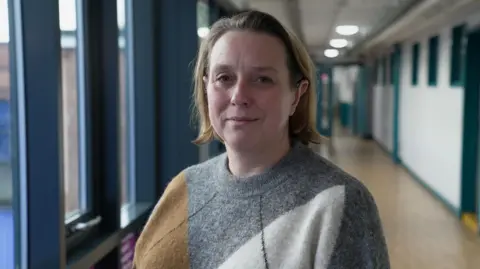
He has the “best of both worlds”, according to his mum Laura Jerram who says the pastoral support he has received has been “the key to keeping him in the school”.
But Brendan’s journey to get to this point has been “really difficult”.
He missed a lot of primary school before he came to Ninestiles and the process of getting an EHCP was “a horrible journey”, Ms Jerram explains.
“It’s a bit of a bun fight [to get an EHCP] and the most resourced families tend to come out on top, unfortunately.
“I feel that for Brendan, if he’d had support much earlier on, he may not have fallen out of education the way he did.”
 Gemma Laister/BBC
Many parents are unhappy and frustrated with the way the system is currently working with the National Audit Office (NAO) warning that despite increased investment, outcomes for students have not improved.
The number of parents taking councils to court over issues with Send provision reached a record high in 2024-2025, figures by the Ministry of Justice revealed on Thursday.
There were 25,000 Send appeals, up 18% from the previous year, with most disagreements over the content of EHCPs.
The free schools which will not go ahead will now go through a consultation period.
Plans by Eton College to open selective sixth-form centres in Dudley and Oldham have been approved, but its Middlesbrough proposal is earmarked for cancellation.
Free schools are publicly funded but are privately run by academy trusts, universities, charities, or faith groups.
Additional reporting by Kate McGough and Hazel Shearing