
This post was originally published on this site.
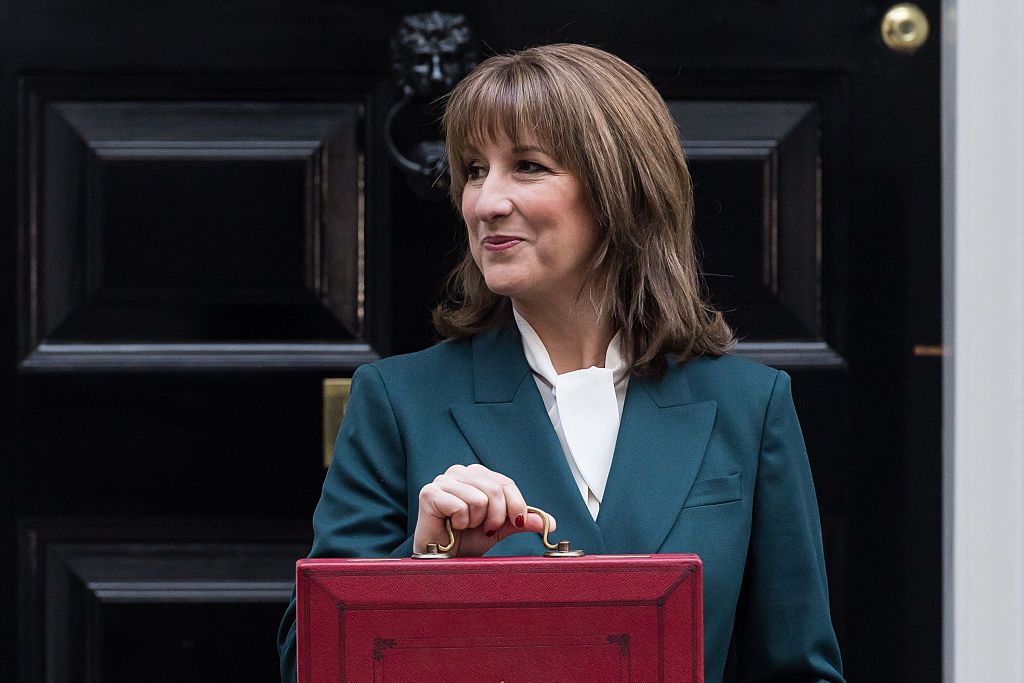
What happened at the Autumn Budget?
Taxes are up – a lot: another £26 billion a year by 2029, drawing millions more into higher tax bands. That’s almost as big as the £32 billion raised in last autumn’s Budget, with its job-destroying increase on employers’ national insurance contributions. Spending is going up, as a political choice, as is borrowing. Thanks to the higher taxes, fiscal headroom will double to £22 billion – this is the amount by which government can increase spending or cut taxes without breaking its own fiscal rules, in this case, to have national debt falling as a percentage of GDPwithin five years.
Did the Budget contain any good news?
Increasing fiscal headroom is a “sensible move for which the chancellor deserves credit”, say economists at the Institute for Fiscal Studies. “By providing greater insulation against economic turbulence, the additional buffer will reduce the risk of playing out this year on repeat in 2026.” Even so, that £22 billion is judged by the Office for Budget Responsibility (the government’s own fiscal watchdog) to be small compared with the uncertainties in the economic outlook. Moreover, it is only 75% of what her predecessors, on average, thought prudent.
Sign up to Money Morning
Don’t miss the latest investment and personal finances news, market analysis, plus money-saving tips with our free twice-daily newsletter
Don’t miss the latest investment and personal finances news, market analysis, plus money-saving tips with our free twice-daily newsletter
There were some other good things, says William Hague in The Times: an increase on limits for investing through venture capital trusts and the enterprise investment scheme, an expansion of the number of companies eligible for share-option schemes for employees; promoting innovation in government procurement; increasing the annual budgets for UK Research and Innovation through to 2030, and mooted improvements in the regulation of the nuclear industry.
Will the Budget boost growth?
Not according to the OBR, no. The watchdog, for all its sparring with the Labour government, actually rode to Reeves’s rescue with a surprisingly upbeat forecast of higher tax revenues driven by higher wages and employment. Yet in their economists’ judgement, none of the policy measures announced in the Budget had a “sufficiently material impact” to justify changing its growth forecast.
The OBR upgraded its GDP growth prediction for the current year to 1.5%, but cut its expectation for the remainder of its five-year forecast. The watchdog now thinks growth will be 1.5% in 2029, below its previous prediction in March of 1.8%. Its overall forecast, averaging 1.5% for the next few years, is better than the 1.2% average since 2008, but far too weak to be transformative.
Does it mean the Budget will harm growth?
The OBR could be wrong, of course. Economic forecasts are famously a mug’s game and the OBR’s are no exception. And Reeves’s speech included some high-flown rhetoric about growth and business. But the prosaic reality is of a directionless and floundering government that is raising taxes to prioritise welfare spending – and appease Labour’s disillusioned backbenchers – at the expense of enterprise, supply-side reform and growth.
What’s more, notwithstanding the relatively sanguine reaction in financial markets (including gilts), the Budget as a whole lacks credibility, according to the Institute for Fiscal Studies. “The additional spending and borrowing in the short term is readily believable. The future restraint, just before the next election? One could be forgiven for treating that with a healthy dose of scepticism.”
What are the damaging measures?
The extra three-year freeze to personal tax thresholds, paired with a surcharge on high-value properties and increases to income-tax rates on property, savings and dividends, all “risk undermining a significant portion of the tax base by pushing more affluent and mobile taxpayers abroad”, says the Financial Times. The ill-judged plan to raise £4.7 billion by curbing pension salary-sacrifice reliefs will penalise savers, raise employers’ costs and damage work, investment and confidence. A steep rise in minimum wages next April will layer on further costs for businesses and weaken hiring incentives.
And the Budget leaves the UK on an ever-upward trajectory of government debt. According to the OBR, its measures means that UK debt will rise to 95% of GDP this year and end the decade at 96% of GDP, which “is two percentage points higher than projected in March and twice the debt level of the average advanced economy”.
Any reasons to be cheerful?
The most “depressing” thing, says Martin Wolf in the Financial Times, is the lack of any meaningful pro-growth agenda. It is bizarre, and ominous, that even a “government with a huge majority dares to do so little to transform economic prospects”. The optimistic view, says David Smith in The Sunday Times, is that if the chancellor (as she hopes) has finally delivered the stability promised, then this will bring benefits. “Financial markets will no longer be constantly on edge and businesses will have the confidence to invest (though the OBR revised down its business investment forecasts).” Consumers could regain the confidence to spend, helped by lower interest rates.
But that’s a lot of ifs. Labour’s “soak the rich” approach is not the way to drive growth, says Ambrose Evans-Pritchard in The Telegraph. It deserves credit for “ending the long and lamentable failure of the British state to invest in infrastructure” – pushing up public investment to 2.6% of GDP from the long run average of 1.6% – and it’s possible a productivity boost from AI will lift the UK’s growth rate and public finances in the coming years. But will Labour still be around to reap the rewards? You wouldn’t bet on it.
This article was first published in MoneyWeek’s magazine. Enjoy exclusive early access to news, opinion and analysis from our team of financial experts with a MoneyWeek subscription.
Explore More