

This post was originally published on this site.
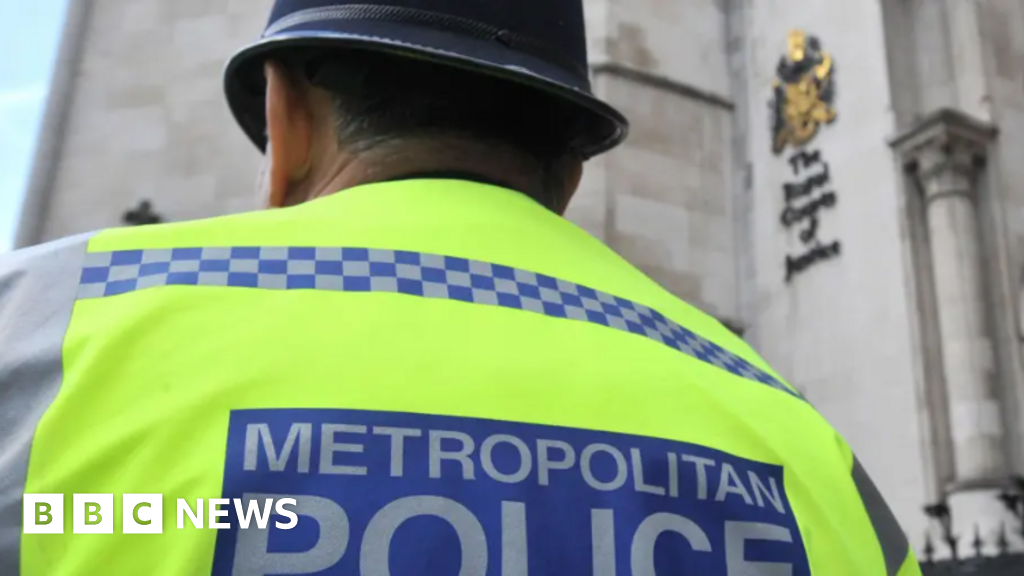
The Metropolitan and Greater Manchester police forces have said they will arrest people holding placards and chanting the phrase ‘globalise the intifada’ – an Arabic word for uprising.
In a statement following Sunday’s mass shooting at Bondi Beach in Sydney, they said: “Violent acts have taken place, the context has changed – words have meaning and consequence. We will act decisively and make arrests”.
The two forces also referenced the Manchester synagogue attack in October.
The UK’s chief rabbi told the BBC this week that chants of ‘globalise the intifada’ had helped lead to the two attacks.
The police forces said: “We know communities are concerned about placards and chants such as ‘globalise the intifada’ and those using it at future protests or in a targeted way should expect” the two forces “to take action”.
“Frontline officers will be briefed on this enhanced approach. We will also use powers under the Public Order Act, including conditions around London synagogues during services,” the statement said.
Visible patrols and protective security measures around synagogues, schools, and community venues have been stepped up in London and Greater Manchester.
Fifteen people were killed and dozens of others were injured in Sunday’s Bondi attack, which targeted Australia’s Jewish community at an event celebrating the first night of Hanukkah.
Two people died in the knife attack at the Heaton Park Hebrew Congregation Synagogue on 2 October.
Responding to the joint statement by police, the Board of Deputies of British Jews said: “We strongly welcome this necessary intervention.”
“We have long warned that people chanting slogans like ‘globalise the intifada’ are inciting violence, and we have been making the case for robust enforcement in relation to this slogan with government at all levels for some time,” the board said.
UK Prime Minister Keir Starmer announced in parliament on Wednesday that his government has increased funding for Jewish security up to £28m.
“I’m pleased to do that, but I’m sad to do that,” he said, adding that he has ordered a review of protest and hate crime laws.
He was responding to a question from Liberal Democrat leader Sir Ed Davey, who said antisemitism was real, “poisonous” and that “we must all work together to stamp it out”.
The term intifada came into popular use during the Palestinian uprising against Israeli occupation of the West Bank and Gaza Strip in 1987.
It was a largely unarmed and popular uprising that continued until the early 1990s. The intifada also saw the development of groups outside the control of the Palestine Liberation Organisation (PLO) – notably Hamas.
The second Intifada began in September 2000 after a controversial visit by Ariel Sharon, then opposition leader, to a holy site in Jerusalem. It is sometimes referred to as “al-Aqsa intifada” after the al-Aqsa Mosque in the Haram al-Sharif site, known to Jews as Temple Mount.