
This post was originally published on this site.
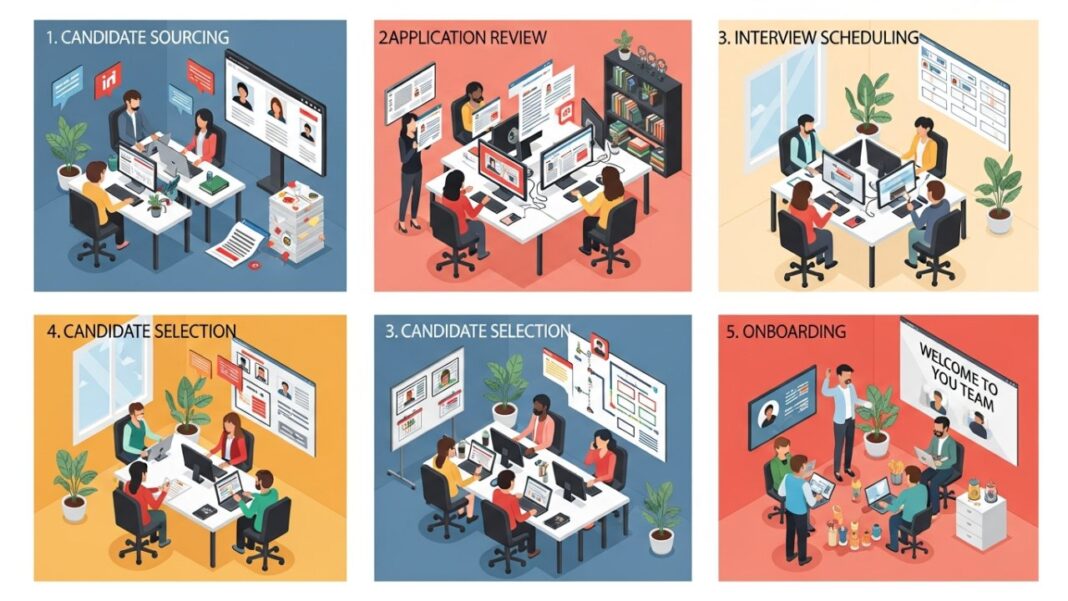
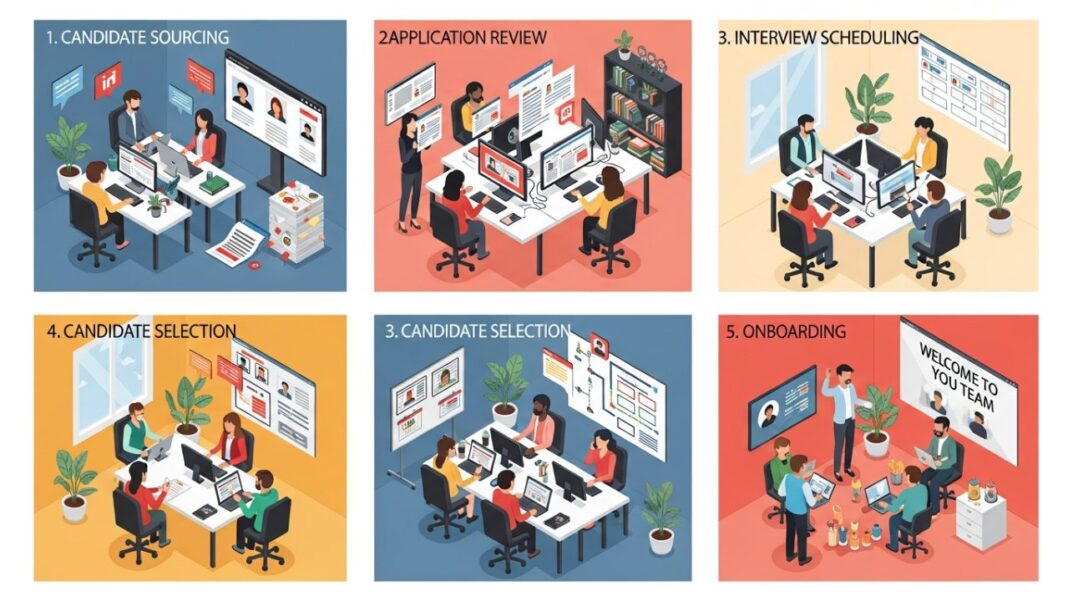
If you want to optimize your recruiting workflow, it’s vital to start by evaluating your current process. Identifying inefficiencies can lead to improvements that save time and resources. Collaborating with hiring managers to clearly define job roles is likewise important. Moreover, streamlining your screening methods and enhancing the candidate experience will make a significant difference. Finally, consider how an effective onboarding program can support new hires. Comprehending these steps can transform your recruitment strategy. What comes next?
Key Takeaways
- Assess and analyze the current recruitment workflow to identify inefficiencies and bottlenecks for targeted improvements.
- Collaborate with hiring managers to create precise and aligned job descriptions that reflect organizational goals and required skills.
- Streamline the screening process using automation and pre-employment assessments to enhance efficiency and objectivity in candidate selection.
- Improve candidate experience through effective communication and timely feedback, ensuring candidates feel valued throughout the recruitment process.
- Develop a structured onboarding program that integrates new hires into the company culture and provides ongoing training and support.
Assessing Your Current Recruitment Workflow

How effectively is your recruitment workflow functioning? Evaluating your current recruitment workflow is vital for identifying inefficiencies. Start by reviewing each step, from job requisition to onboarding, to pinpoint areas that need improvement.
Gather feedback from hiring managers, recruiters, and candidates to understand their experiences and pain points. This collective input will provide valuable insights into the challenges your recruiting workflow faces.
Additionally, utilize hiring software analytics to uncover hidden inefficiencies, such as bottlenecks and high candidate drop-off rates, which mightn’t be immediately visible.
Establish a structured roadmap for improvement based on your evaluation findings, ensuring each step is targeted toward enhancing efficiency. Regular evaluations of your recruitment workflow can lead to reduced time-to-hire and an improved candidate experience, in the end optimizing your entire recruitment process.
Defining Job Roles and Requirements
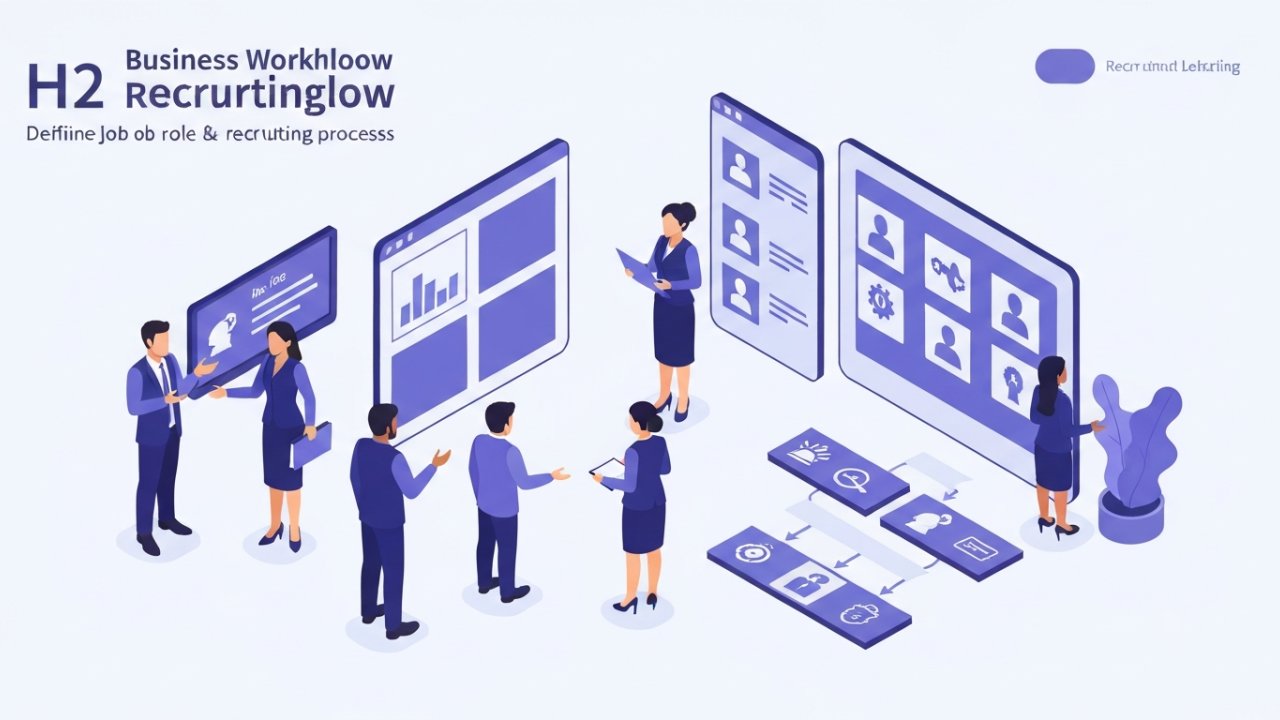
A well-defined job role is the cornerstone of an effective recruitment process. By collaborating with hiring managers, you can create precise job descriptions that clearly outline responsibilities and expectations. These descriptions should align with your organization’s goals and culture, attracting candidates who fit well.
To streamline the screening process, specify the required skills, qualifications, and experience, establishing minimum and desirable criteria. Utilizing data from previous hiring processes can improve the accuracy of your job role definitions.
Here’s a simple table to guide you in defining job roles:
[embedded content]
| Aspect | Details |
|---|---|
| Responsibilities | Outline key tasks and duties |
| Required Skills | List crucial skills and qualifications |
| Cultural Fit | Reflect organization’s values |
| Adaptability | Regularly update to match market needs |
Understanding the full cycle recruiting meaning allows you to optimize this stage effectively, ensuring you attract top talent.
Streamlining the Screening and Selection Process

To improve the efficiency of your recruitment efforts, streamlining the screening and selection process is essential. Implementing recruitment automation, such as automated resume screening tools, can greatly reduce initial screening time by up to 75%. This allows you to quickly filter out unqualified candidates, focusing on those who meet your criteria.
Conducting initial phone screens helps assess candidate suitability and cultural fit, enabling you to concentrate on high-potential candidates for in-depth interviews.
Integrating customized pre-employment assessments offers objective evaluations that can predict job performance with a 60-80% accuracy rate.
Furthermore, leveraging video interviews for remote hiring expedites the process, allowing multiple stakeholders to assess candidates simultaneously from different locations.
Involving diverse stakeholders in the selection process can lead to a 50% reduction in hiring biases, ultimately enhancing overall hiring decisions.
These strategies work together to create a more efficient and effective recruitment workflow.
Improving Candidate Experience During Recruitment

Improving the candidate experience during recruitment is essential for attracting top talent and nurturing a positive organizational reputation.
Effective communication plays a key role; 78% of candidates appreciate timely updates on their application status. By implementing recruitment process automation, you can provide clear and transparent information about the hiring process, reducing candidate anxiety—67% of job seekers prefer knowing each step.
Offering timely feedback after each stage is critical, as 62% of candidates report it positively influences their perception of your organization. Personalizing the experience by addressing candidates by name and acknowledging their qualifications is important, with 69% valuing this approach.
Remember, a smooth and respectful process can greatly improve your organization’s reputation; 80% of candidates who’ve a positive experience are likely to share it online or with others.
Prioritize these strategies to improve candidate satisfaction and strengthen your employer brand.
Onboarding and Integrating New Hires

When new hires join your organization, a structured onboarding program is crucial for helping them feel welcomed and informed right from the start. It should cover important topics like company policies, culture, and job-specific training.
Clearly communicating performance expectations and establishing key performance indicators (KPIs) during onboarding allows new employees to understand their roles and how success is measured.
To improve workplace integration and morale, facilitate connections among new hires and existing team members through social events and mentorship programs. Additionally, provide ongoing training and development opportunities during this phase to encourage continuous growth and help new hires adapt effectively.
Incorporating automated hiring processes can streamline onboarding tasks, making the experience smoother.
Finally, solicit feedback from new hires about the onboarding process to identify areas for improvement, ensuring a more effective and engaging experience for future employees.
Frequently Asked Questions

What Are the 5 C’s of Recruitment?
The 5 C’s of recruitment are Competence, Compatibility, Commitment, Culture, and Communication.
Competence evaluates candidates’ skills necessary for the job. Compatibility assesses how well candidates fit within the team and role expectations.
Commitment reflects their dedication, often seen in career history. Culture examines alignment between candidates’ values and the organization’s environment, essential for retention.
Finally, Communication gauges how effectively candidates can convey ideas and collaborate with others, enhancing overall team dynamics.
What Are the 7 Steps of the Recruitment Process?
The recruitment process involves seven key steps.
First, you identify hiring needs by clarifying the position’s purpose.
Next, you craft a detailed job description outlining qualifications.
Then, you source candidates through job boards and social media.
After sourcing, you screen applications using tools and initial phone screenings.
Following that, you conduct interviews to evaluate candidates.
Finally, you make a selection and onboard new hires, ensuring they integrate smoothly into the organization.
[embedded content]
What Are the 5 Steps of the Recruitment Process?
The recruitment process consists of five key steps.
First, you’ll conduct an intake session to clarify job requirements with hiring managers.
Next, you’ll create a structured job posting to attract suitable candidates.
After that, you’ll screen resumes and perform initial conversations to assess fit.
Then, you’ll conduct interviews to evaluate candidates’ skills and cultural alignment.
Finally, you’ll extend an offer to the selected candidate, including salary discussions and necessary approvals.
[embedded content]
What Are the 3 P’s of Recruitment?
The 3 P’s of recruitment are People, Process, and Performance.
First, you need to engage the right individuals, like hiring managers and recruiters, to align on candidate qualifications and culture fit.
Next, establish a structured process that guides you from job requisition to onboarding, ensuring consistency and efficiency.
Finally, focus on performance by measuring key metrics such as time-to-hire and quality of hire, allowing you to refine your recruitment strategy continuously.
Conclusion

By following these five fundamental steps, you can greatly optimize your recruiting workflow. Evaluating your current process helps identify inefficiencies, whereas clearly defined job roles guarantee alignment with organizational goals. Streamlining screening through automation improves efficiency, and enhancing candidate experience promotes positive interactions. Finally, a structured onboarding program is vital for integrating new hires. Implementing these strategies not merely improves recruitment effectiveness but additionally contributes to long-term organizational success and employee satisfaction.
Image via Google Gemini