

This post was originally published on this site.
The Met Office has announced that 2025 has been the sunniest year in the UK since records began in 1910.
With two weeks of the year still to go, provisional data shows that 1622 hours of sunshine have been recorded, beating the previous record set back in 2003.
All months this year excluding February and October recorded above average sunshine hours.
The record-breaking sunny year was bolstered by an exceptional spring, which was not only the sunniest and warmest on record, but also the driest in more than 50 years.
Where were the sunniest spots?
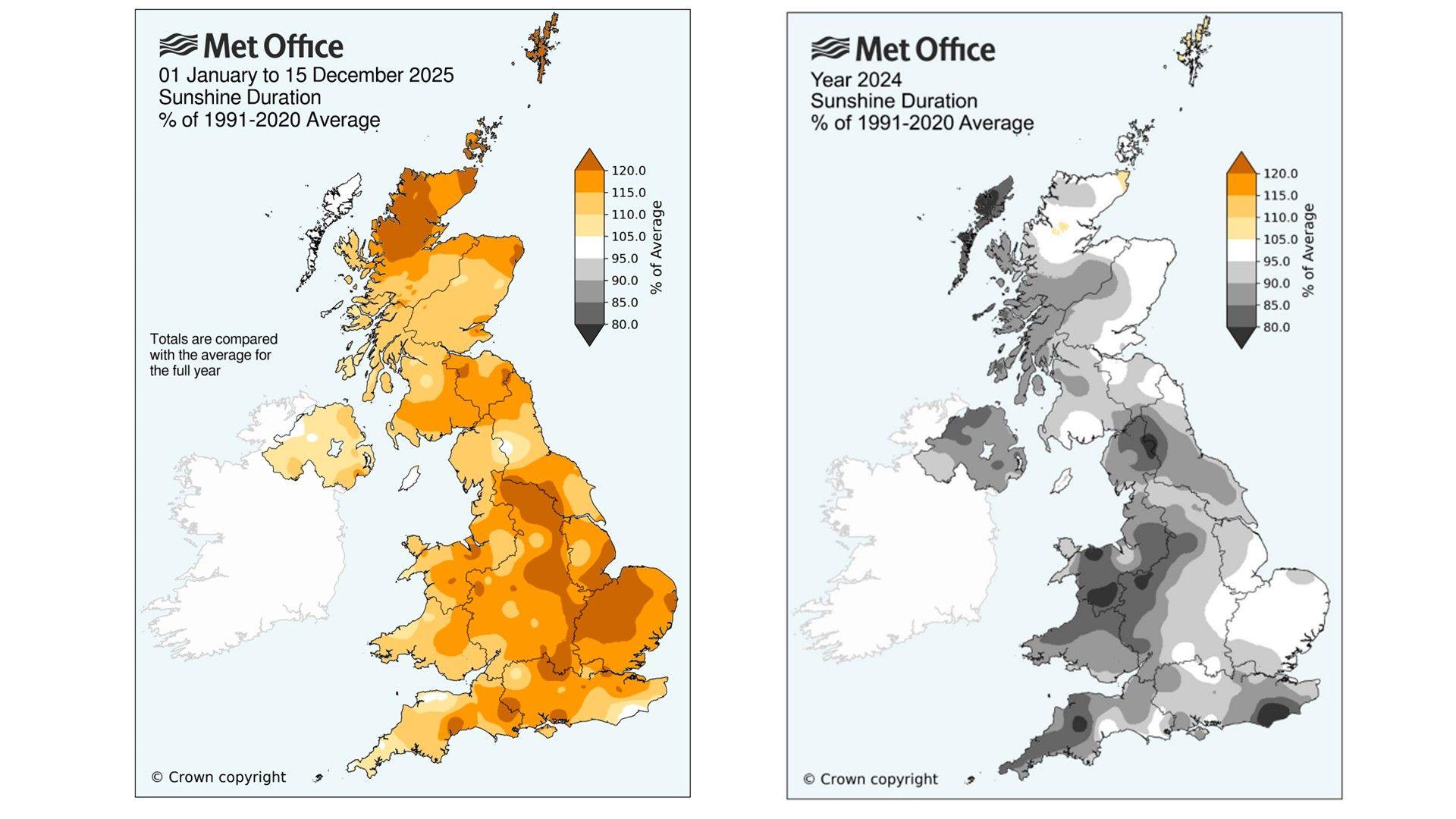
Whilst the UK as a whole has seen well above average sunshine hours this year, there have been some big regional differences.
Looking at the data for the four nations separately, only England has broken its record for the sunniest year, whilst 2025 is currently the second sunniest year in Scotland and the sixth sunniest in Wales.
In Northern Ireland, although sunshine has been above average in 2025, it is currently not in the top 10 sunny years on record – but may come close by the end of December.
The most notably high sunshine amounts, compared to average, were recorded in eastern England and northern Scotland.
Why has there been so much sunshine this year?
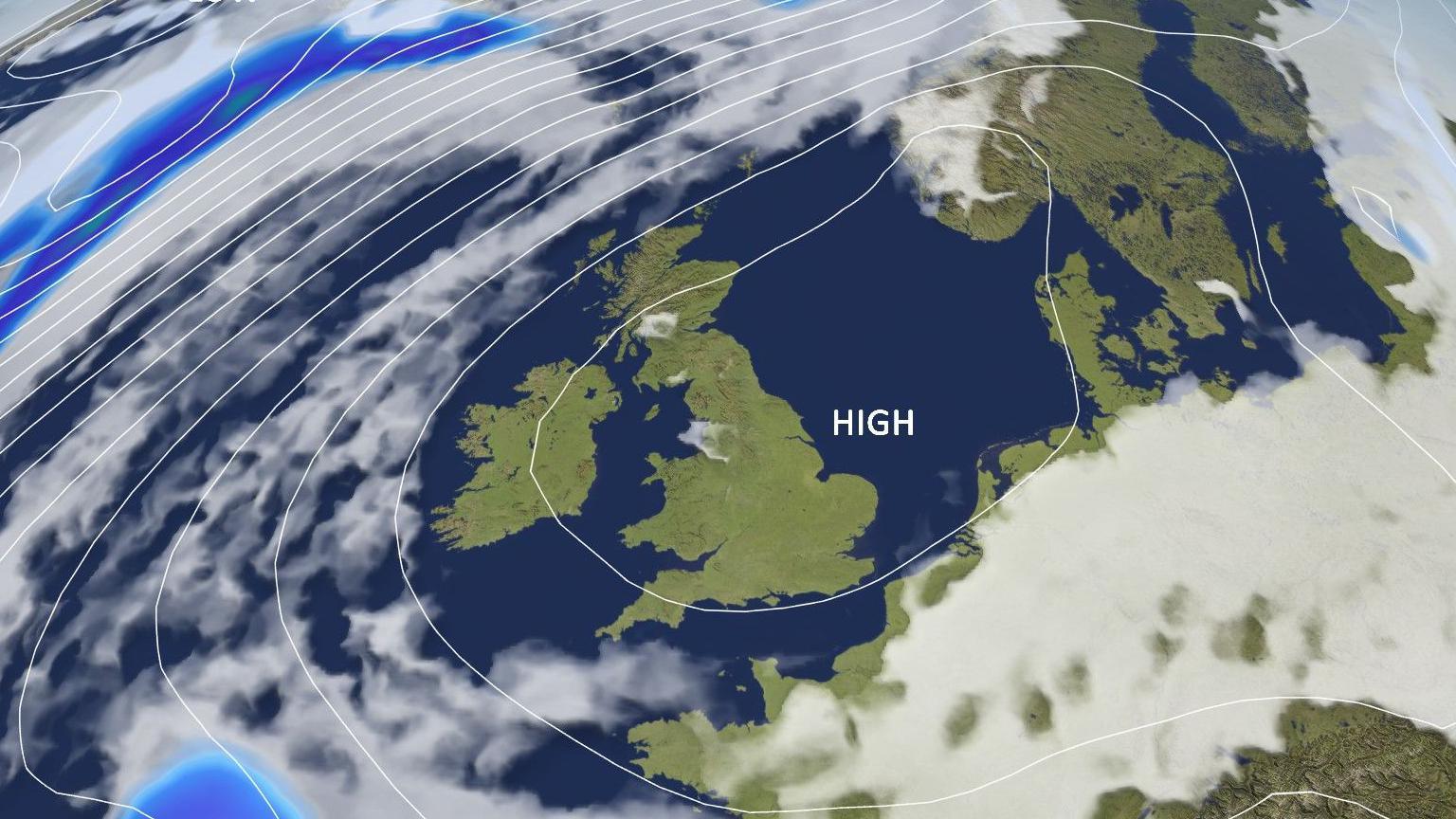
High pressure has been a frequent feature of 2025’s weather.
Areas of high pressure form as air descends in the atmosphere, leading to largely dry and settled weather. Depending on the exact location of the high, and the time of year, this can bring sunny skies that last several days.
The behaviour of the jet stream influences where high and low pressure systems form. During 2025 the jet stream has often been positioned well to the north of the UK, allowing higher pressure to build to the south, across the UK, blocking rain-bearing weather fronts from reaching our shores.
How is sunshine measured?
Sunshine hours are measured and recorded at nearly 300 Met Office observing sites across the UK. Two types of instrument are used: either a Campbell-Stokes sunshine recorder or a modern sunshine duration detector.
“Sunshine” is recorded when the strength of the Sun is at least 120 watts per square metre. When passing clouds obscure the Sun, the strength typically dips below this threshold.
Is climate change bringing more sunshine?
Whilst we know that climate change is influencing our weather in several ways – higher temperatures, wetter winters and drier summers – the link between climate change and sunshine is still unclear.
The Met Office says, “The UK has generally become sunnier since the 1980s. The cause of this trend is uncertain and it may simply be down to natural variability, though reduced aerosols could be a factor.”
The past few years have seen huge variability in sunshine amounts, with 2024 being the dullest year since 1998, followed by 2025, which will go down as the sunniest year on record.
Will the sunny theme continue into the start of 2026?
Although 2025 has been an exceptionally sunny year overall, it is worth noting that recent months haven’t been quite so bright. In fact autumn was actually slightly duller than average and December has seen around average sunshine so far.
As we head towards the new year, there are signals of a return to the influence of high pressure, which could bring with it sunny skies at times, although during the winter months, high pressure can trap cloud and moisture – something called anticyclonic gloom.
Keep up to date with our latest thoughts on the longer-range forecast in our monthly outlook or by downloading the BBC Weather app.
See also
-
-
6 November 2024
-