
This post was originally published on this site.
Lucy CarlinBBC News NI

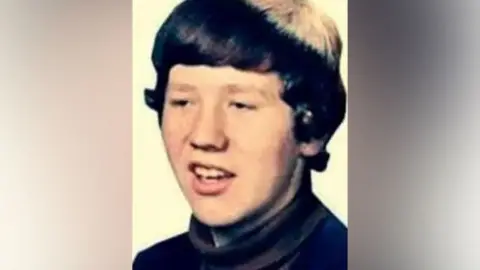
The most recent search to find the remains of Columba McVeigh, who was murdered by the IRA and secretly buried 50 years ago, has ended without success.
The 19-year-old, from Donaghmore in County Tyrone, was murdered in 1975. He is one of 17 victims of the Troubles known as the Disappeared.
The latest search for Mr McVeigh’s remains had been taking place at Bragan Bog in County Monaghan since August, after a review of previous operations identified a new area to be excavated.
The Independent Commission for the Location of Victims’ Remains (ICLVR) had previously conducted six excavations of Bragan Bog and has covered more than 26 acres in their search for Mr McVeigh.
‘Our hearts go out to them’
On Wednesday, the ICLVR said the McVeigh family had been informed that the most recent search had ended without success.
Eamonn Henry, the lead investigator for the ICLVR, said that it was “devastating news” for the McVeigh family, so close after the 50th anniversary of his disappearance.
Mr Henry said it was “heartbreaking” to tell the family about the latest development, but that they remain positive about finding Mr McVeigh.
“I just wish it was now rather than further down the line.”
Speaking to BBC News NI’s Good Morning Ulster programme, Mr Henry said the ICLVR will be following up recent information it has received in the new year.
“Based on information received that he was actually buried in a different part of Bragan Bog, we’re now exploring that information in relation to another possible location,” he added.
Mr Henry said the suspected location is close to where recent searches have taken place.
ICLVR ‘fully committed to finding Columba’
There have been seven searches of the Bragan Bog area for Mr McVeigh’s remains.
Mr Henry said they continued to believe the information they were working on had been given in good faith, but urged those who many have information to contact them as it could be the “missing piece of the puzzle”.
“We’re not finished in Bragan Bog,” Mr Henry added.
He said the commission would not stop until the four remaining Disappeared – Columba McVeigh, Joe Lynskey, Capt Robert Nairac and Seamus Maguire – were found.
“That’s our remit and we’re working on behalf of the families so until we find the four missing victims, we will not stop working.”
Last month, Northern Ireland Secretary Hilary Benn met members of the McVeigh family at Bragan Bog, and he urged anyone with information about Mr McVeigh’s remains to come forward.
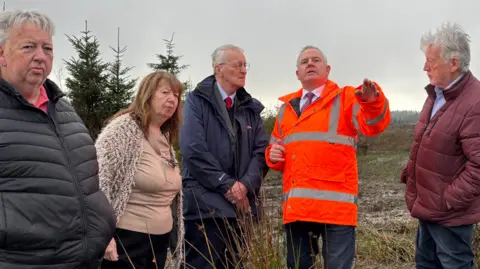
On Wednesday, Benn said Columba’s family had endured an “unimaginable burden”.
“I want to acknowledge the diligence and determination of the commission to locate Columba since the first search at Bragan Bog was conducted in 1999, as well as the investigators, forensic archaeologists and the search teams for their painstaking and sensitive work,” he added.
“Today, my thoughts are with the family of Columba who have endured this unimaginable burden for so many years, and who only recently marked the 50th anniversary of his death.”
He said the government remained committed to the work of the ICLVR.
Irish Justice Minister Jim O’Callaghan said when the commission began the latest search in August, he had hoped that Columba McVeigh’s family “would finally have the solace of being able to lay him to rest.”
“I am disappointed that, in spite of the continued efforts of the commission, Columba’s remains have not been located at Bragan Bog, County Monaghan.”
The minister added the ICLVR’s role was a “critical, humanitarian one” that the Irish government remained “fully committed” to supporting.
Who are the Disappeared?
The Disappeared are those who were abducted, murdered and secretly buried by republicans during Northern Ireland’s Troubles.
The remains of four of the 17 have yet to be found.
As well as Mr McVeigh, the ICLVR is still working on the cases of Joe Lynskey, Capt Robert Nairac and Seamus Maguire.
Mr Henry said that anyone with information on any of the four outstanding cases should contact the ICLVR and all information would be treated with the strictest confidence.