

This post was originally published on this site.
Violence against women and girls is a “national emergency”, the home secretary has said, as she announced plans to set up specialist rape and sexual offence investigation teams in every police force in England and Wales by 2029.
It is part of a long-delayed plan aimed at halving violence against women and girls within a decade.
The strategy – which will include funding for undercover units operating online, and a roll out of domestic abuse protection orders – is due to be unveiled on Thursday, after being pushed back three times this year.
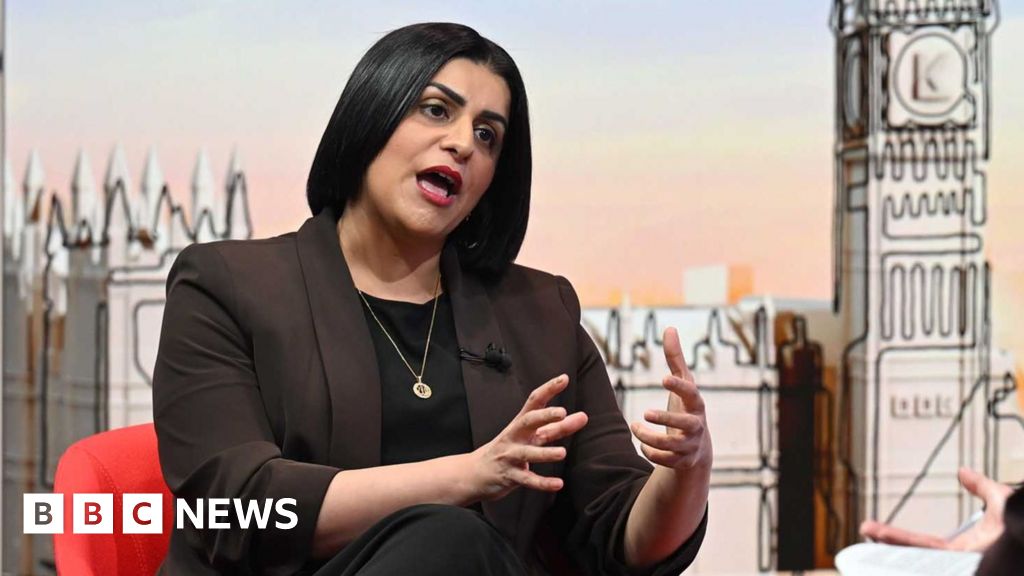
Shabana Mahmood said that during her time in government she had come to “the depressing conclusion” that “the criminal justice system fails women”.
Speaking to the Sunday with Laura Kuenssberg programme, she said the way police forces investigate cases was “too much of a postcode lottery”.
The government says the new teams will have officers with specialist investigation skills for working on rape and sexual offence cases.
It says staff will have the right training to understand the mindset of abusers and victims.
More than 50% of police forces already have these teams in place, but the government says every force will have dedicated officers by 2029.
Metropolitan Police Commissioner Sir Mark Rowley welcomed the move, saying the government will replicate tactics used by the Met in its existing V100 programme.
The programme uses data to identify and target men who pose the highest risk to women.
Sir Mark said the Met applies the “same relentless determination we use to combat terrorism to tackle violence against women and girls”, adding: “We built an entirely new system focused on pursuing and prosecuting men who commit violence and I am pleased the government is now asking all forces to have the same principle.”
Also announced is a roll out of domestic abuse protection orders, which have been trialled over the last year, across England and Wales.
They can ban individuals from contacting a victim, visiting their home or posting harmful content online, and can also be used in cases involving coercive or controlling behaviour. Breaching an order is a criminal offence.
Mahmood said the early evidence from the pilots on the effectiveness of the orders was “very, very positive” with a large number of arrests of people breaching the orders.
“The really different thing that those orders do is they take the onus away from the woman, the victim herself, to chase her abuser all the way around different bits of the legal system in order to enforce the order and actually puts it back on the police,” she said.
There will be almost £2m in investment for special undercover units of police officers operating online – to target those harassing women and girls on the internet.
The government is also looking at extending Clare’s Law to include offences such as stalking, sexual assault and harassment.
The law was established in memory of Clare Wood, who was murdered in 2009 by her-ex-boyfriend who had a history of violent behaviour.
It currently allows people to ask for information from the police about their partner, or ex-partner’s, history of domestic abuse.
A report released earlier this month found that more than a quarter of police forces in England and Wales had not implemented basic policies for investigating sexual offences.
It said sexually-motivated crimes against women in public remained widespread, criticised the limited nature of data on them, and called for urgent action to prevent predators from offending.
The publishing of the government’s strategy has been long delayed. It was initially expected to be announced in the spring.
In Labour’s general election manifesto last year the party pledged to use “every government tool available to target perpetrators and address the root causes of abuse and violence”.
On Tuesday, the chairs of three Commons select committees raised their concerns over repeated delays in publishing the plans.
The BBC has previously been told that changing attitudes among boys and young men will be at the centre of what is proposed.
It is understood it will be built around three goals: preventing radicalisation of young men, stopping abusers, and supporting victims.
Some domestic abuse survivors have told the BBC the time for talking is over – and these measures must be implemented quickly.
Conservative shadow home secretary Chris Philp called the announcement “too little, too late”.
Speaking to Laura Kuenssberg, he said it was “disappointing” it had taken the government a year and a half to produce its strategy and that the funding provided was “a very small amount”.
Asked why the previous Conservative government, of which he was a member, and the current Labour one had struggled to grip the problem, he said both parties took the issue “seriously” but added that the criminal justice system was “quite slow and bureaucratic”.
He said changes to the disclosure of evidence, introduced after a prosecution collapsed in 2017, had “slowed the whole system down”.