

This post was originally published on this site.

Stay informed with free updates
Simply sign up to the Hedge funds myFT Digest — delivered directly to your inbox.
Hedge funds and trading firms are piling into physical commodities markets in search of new sources of returns, despite lacking the decades of experience and information accumulated by established players such as Trafigura and Vitol.
Financial firms have a long history of trading contracts for power, natural gas and oil. But hedge funds such as Balyasny, Jain Global and Qube, as well as trading firm Jane Street, are expanding their operations to allow them to trade the underlying markets, deepening their exposure to global price swings.
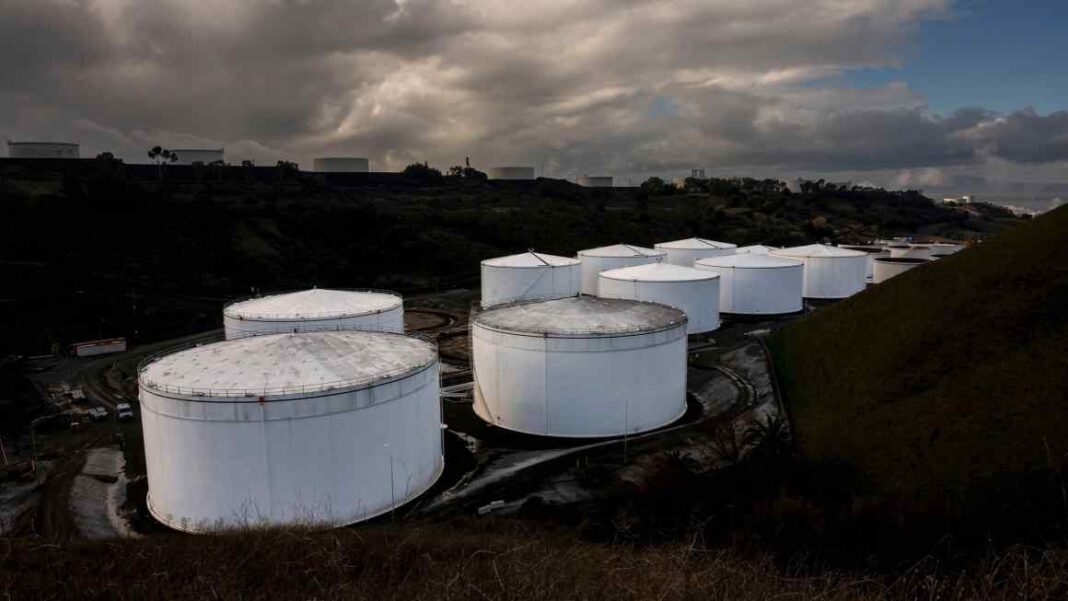
This can involve buying the rights to transport natural gas over a pipeline, buying storage capacity for crude oil and storing electricity in advanced batteries before offloading it at peak demand times. Trading these markets can confer an informational advantage to market participants.
“It’s an information gold rush,” said Michael Alfaro, chief investment officer of hedge fund Gallo Partners, which is focused on energy and industrials. “When you’re trading physical commodities, you’re privy to a lot of information and you get a sense of what is actually happening from economic shifts before the actual data comes in.”
Multi-manager hedge fund Balyasny has expanded its power trading teams and researchers in Europe by hiring from utilities such as Centrica and Norlys, and has added natural gas traders.
Multi-strategy hedge fund Jain Global this year bought Anahau Energy, which specialises in natural gas services, and is now actively trading the commodity.
Quantitative hedge fund Qube moved into European physical power in Europe via affiliate Volta, which also recently applied to join as a member of NEPOOL, an advisory group that helps draft rules for physical power markets across six US states. At least nine natural gas and power traders have joined Qube since 2024, according to an analysis of LinkedIn profiles.
Hedge funds have partly been inspired by the huge profits enjoyed by trading firms such as Trafigura and Vitol. Hedge fund Citadel also generated huge returns in 2022, as volatility in natural gas prices minted fortunes for top traders, particularly in Europe.
Citadel has long invested in energy assets to aid its trading activities, but this year the hedge fund has been particularly busy with deals. In March, it acquired assets in the Paloma gasfield in Louisiana for $1.2bn. In October, it bought German energy trader FlexPower, which has a subsidiary developing its own grid-scale battery projects. More recently, its subsidiary Apex Natural Gas agreed in two different transactions to buy natural gas assets in Texas’s Haynesville basin, according to a person familiar with the matter.
This year has been more muted for hedge funds and trading firms compared with 2022, as commodities such as oil and gas have traded in tighter ranges.
“It’s always been feast or famine in commodities,” said a hedge fund allocator at one of the world’s top asset managers.
For large hedge funds, going into physical commodities offers a separate return stream that theoretically makes a hedge fund more diversified. The potential upside from extremely volatile years such as 2022, when Russia invaded Ukraine, outweighs lower return periods.
Physical traders can benefit from surges in demand that hedge funds can anticipate through advanced weather reports and other data.
An executive at a large hedge fund said that physical power in particular was a sweet spot for hedge funds because of the ability to use analytical techniques to anticipate consumer demand for power across US states and European countries.
Hedge funds can also take delivery of commodities and store them for a period while prices dip and later sell them when those prices recover.
Ilia Bouchouev, managing partner at New York hedge fund Pentathlon Investments, said that financial players were more likely to lease batteries or take out contracts with options embedded rather than own the physical battery structures.
“This is similar to how the oil storage business has worked for decades and batteries are just a new form of storage,” he said.
But this also requires taking unfamiliar risks in areas outside their traditional expertise.
Hedge fund firm Amaranth collapsed in spectacular fashion in the mid-2000s after a dalliance with commodities. The firm shifted away from investing in convertible bonds and lost 35 per cent of its $7.5bn of investor capital on disastrous natural gas wagers — although these trades were made using financial derivatives contracts rather than physical deals.
An executive at a top quantitative hedge fund that trades commodities but is not in the underlying physical markets questioned how hedge funds could hope to compete with trading firms such as Vitol, Trafigura and Gunvor as well as corporates including BP and Shell.
“The major commodity trading houses have huge balance sheets and they actually control the whole logistical supply chain in commodities, from transportation to refinement,” he said. “From this supply chain they can extract an enormous amount of valuable information.”
Additional reporting by Ryohtaroh Satoh