
This post was originally published on this site.
Gareth Davies was the hugely respected chairman of the Welsh Rugby Union before he was forced to leave after trying to make change
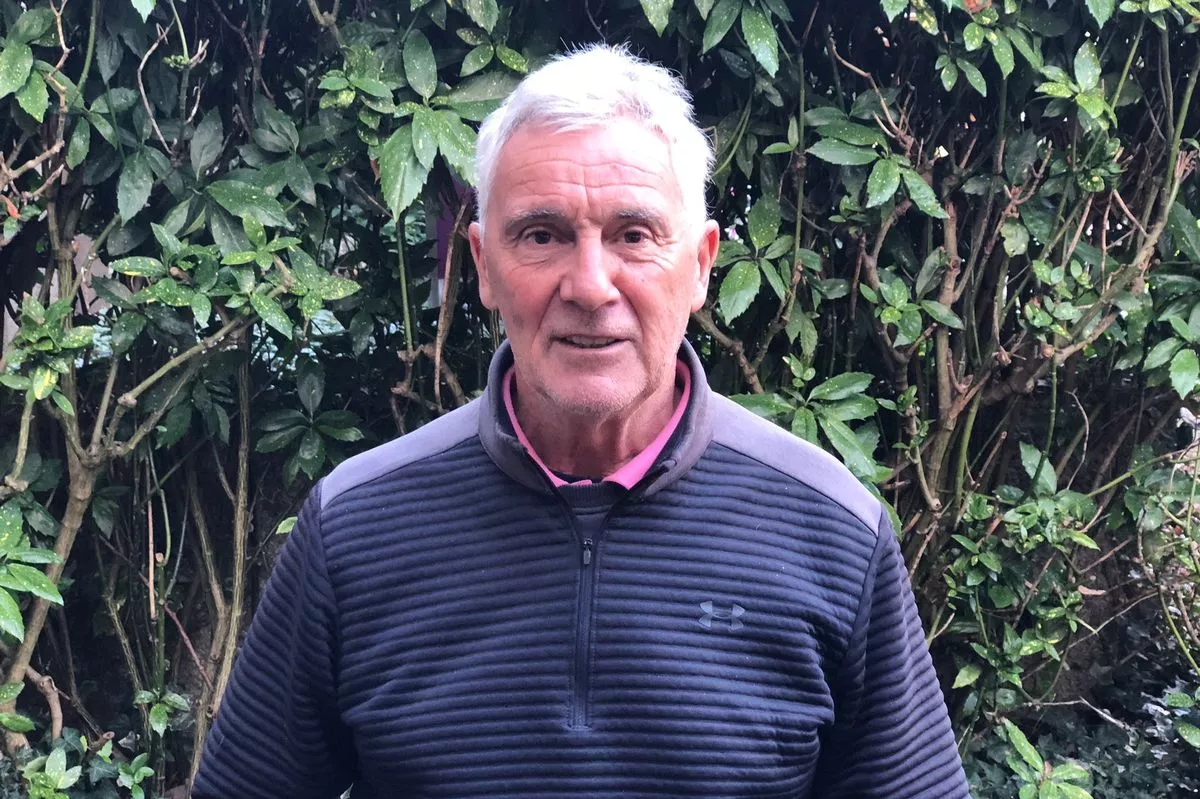
When Gareth Davies reflects on the state of Welsh rugby today, he is struck by one overriding emotion – sadness.
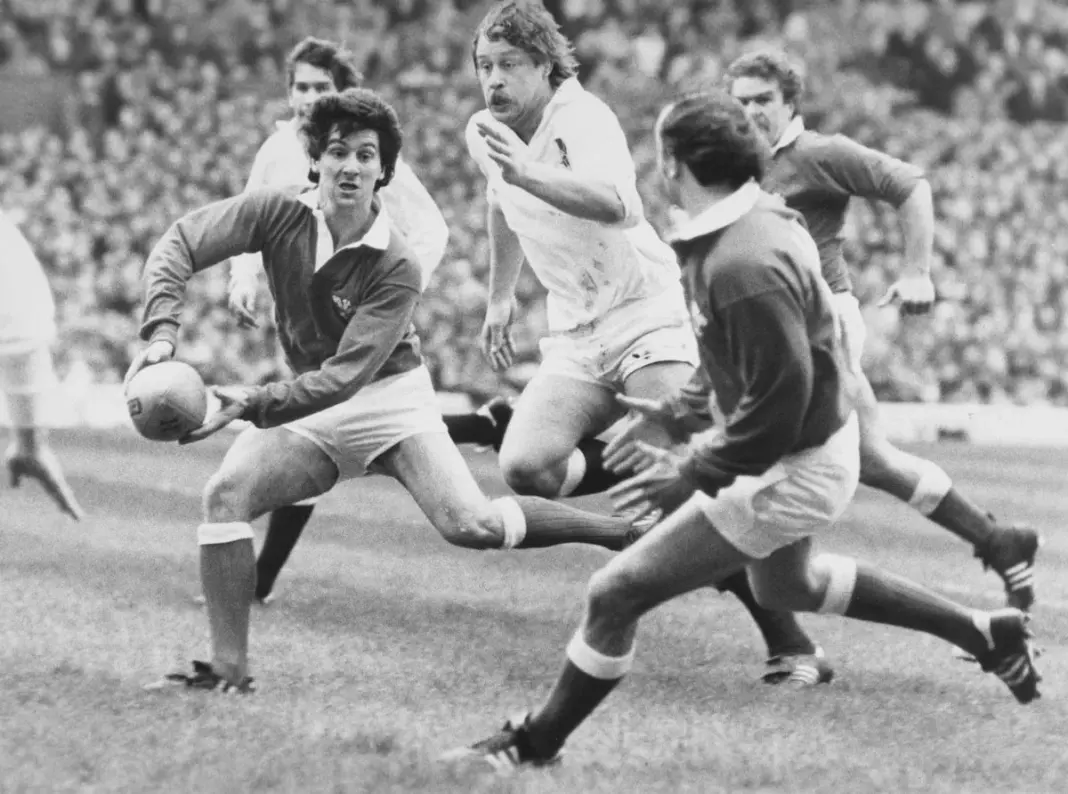
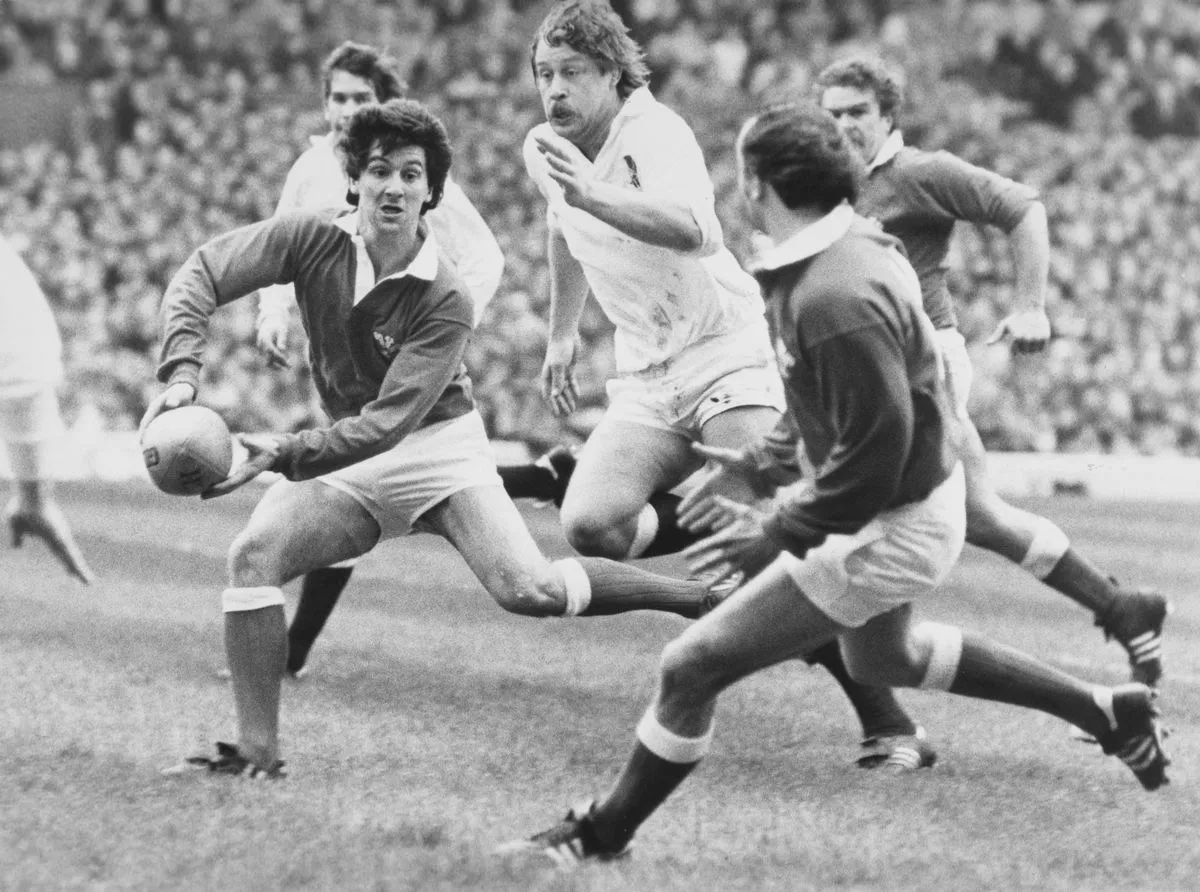
Davies has done it all in the game. He made more than 350 appearances for Cardiff, earned 21 caps for Wales at outside-half, winning a Triple Crown along the way, and was also a Test Lion. After hanging up his boots, he went on to have spells as chief executive of both Cardiff and the Dragons before serving as WRU chairman for six years.
Now 70, he has witnessed plenty of ups and downs, but the current malaise is a particular low, with Wales having won just two of their last 23 Tests, suffering two record defeats this year.
“I am just very sad,” he says, when we meet for a coffee.
“Welsh rugby has been a huge part of my life for more than 50 years, from the age of seven going to watch Llanelli at Stradey Park.
“I am saddened because of what all my mates are saying. They are not interested in the game. The guys I play golf with probably haven’t been to a Test match for ten years.
“People have turned their back on it all because they are so disappointed.
“We are losing my generation in terms of support, which is critical because we are the generation that can afford to go to games, and then you wonder what’s happening with the youngsters.
“I have a 13-year-old grandson who is mad on sport, a very good rugby player. But when Wales were playing South Africa last month, he went off to play golf.”
Given Wales lost 73-0, it might well have been a wise decision. On the subject of which, Davies adds: “One guy told me he was at the game and he was ashamed to be there and that’s an ex-Lion. That’s quite sad. It’s a real pity.”
The big debate, of course, is what needs to be done to improve the situation?
On that front, the WRU’s controversial plan is to cut the number of professional teams to three.
So what does Davies make of it all, given there was talk of restructuring during his own stint as chairman?
“The first time this arose – in 2019 – it was actually introduced by the regions,” he said.
“We had an away day and the Ospreys came out and said they should merge with the Scarlets. It came from them initially and it all blew up before the Scotland game.
“Then there were further approaches that the Ospreys wanted to merge with Cardiff. Then when they saw each other’s books, they went different ways.”
This time around, moves to cut the number of pro teams has been driven by the WRU, with their initial proposal being a reduction to two.
“I think the plan to go to two was ludicrous, from every perspective – supporters, players,” says Davies.
“Surely we can develop more than 80 players in Wales? Is that all we have got? I just felt it was defeatist.”
The plan has now been amended to three, but Davies is not enamoured by that either.
“You look at England. Newcastle haven’t won a league game this season, Harlequins are getting beaten most weekends, but nobody is calling to get rid of them,” he said.
“Why are we just getting rid of people because we’ve had a terrible time? There’s an element of knee-jerk in it.
“Every organisation, every sport has to go through ups and downs.
“In the 1990s, I never thought we would see Wales perform again. We conceded 63 points to Australia, 51 to France and 96 to South Africa.
“I thought that’s it, the game has gone and we are not going to see it come back again. But these things go in cycles. Basing it on past experience, I think we will get better.
“I have got no empirical evidence to prove that four is the right number, but likewise I have got no evidence to prove it’s two or three either.
“I don’t think cutting the number of professional teams is the way to go because of the support base, the player base, the interest base.
“If you cut off the Ospreys, which seems a strong possibility from the way I read it, you are looking at arguably the most productive, fertile development area and the most successful team.
“There is a danger of a geographical area of players and supporters being lost to the game,
“You then weaken your playing base and get a situation where the whole cultural environment is not conducive to what you want to do in terms of aspiring players.
“Are the boys from Maesteg going to come up to Cardiff?
“I doubt if any Ospreys fans would go to watch Cardiff or the Scarlets instead.
“It just seems to me that cutting is not the way to go. It’s defeatism.
“You look at Ireland. They stuck with Connacht and they ended up winning the league. You had three Connacht players on the Lions tour this summer, more than Wales had in total.”
There is an argument that Welsh rugby can only afford three pro teams, so what’s Davies’ response to that?
“I am not close to the books these days, but they are spouting off about how well they are doing financially,” he says.
“We hit the £100m gross revenue mark in one of my years as chairman around 2017, 2018 and we ended up with a pot available to the regions of £26m.
“We did that then, so I don’t know why they can’t afford four now, especially as they have hit the £100m.
“I think it should be four and manage it in such a way that we can afford to do it through weighted payments and looking at the external funds that are around at the moment.
“I am not pointing the finger at anybody because I don’t think that’s the right thing to do. I don’t want to see people criticized, but I am entitled to my opinion.”
He continued: “All the attention has been on is it four or three or two, but there are far more serious issues to address – the biggest one being the management of the community and the professional game.
“If you look at the community game, you have a very large Council of local club representatives who have been there for years. Moving forward, it’s about getting the right people in charge.
“Community people should run the community game, but with better management, and they should have no involvement in the running of the pro game whatsoever.
“As it stands, the community clubs still have the ultimate power over the whole of our game.
“Yet, from what I hear, the recent AGM hardly discussed the pro game at all, despite this being a huge moment for it amid the biggest proposed changes in years.”
One wonders whether Davies had any inkling of future problems looming on the horizon when he was chairman, with his six year tenure running from 2014 to 2020?
“There is a lot of talk at the moment about pathways having been ignored,” he replies.
“I always remember, around about 2017 or 2018, walking around the Centre of Excellence at the Vale and going into the room where some of the age-grade coaches were.
“I recall thinking how well prepared they were because there was a big white board in there with a succession plan for all the positions up until the 2027 World Cup.
“I remember the concern at the time was No 8 and 12, but everything else looked quite promising.
“Plus, you had the likes of Alun Wyn, Faletau and Biggar who still had four or five years to go.
“So, at that time, I suppose the answer is no, I didn’t foresee the current situation because I could see the work that was going on. It was well resourced and things were looking good.”
Of course, what no-one saw coming was Covid. When that happened in 2020, Davies wanted to stay on as chairman to help guide Welsh rugby through the choppy waters. But that hope was dashed when he failed to gain re-election to the National Council.
Looking back, he feels the seeds of that defeat were sown by his attempts to modernise the governance of the WRU in the face of resistance to change from within the community game.
“One of the big issues I inherited was the number of amateur clubs that were wasting money by paying players,” he recalls.
“I stood up in an AGM early on, about 2015, and said ‘I play golf on a Sunday and I’m a better golfer than a lot of these guys that play in Division Two, Three and Four, but do I ask to get paid?’
“To be fair, I had a standing ovation, but then I had so many anonymous letters saying ‘Keep your nose out.’”
Nevertheless, Davies – working alongside chief executive Martyn Phillips – remained determined to bring about reform.
“We reduced the board from 24 to 12, while bringing in non-execs like Amanda Blanc and Aileen Richards, who were brilliant.
“What I also wanted to do was change the districts. We had nine of them which was a total waste of time. I wanted to have four mirroring the four regions and a stand alone in north Wales, so five districts in all.
“We arranged a series of roadshows around the country to explain the proposal and what stood out for me was the people who attended.
“There were people there I had never seen before, people in their late 30s, early 40s, whose kids were playing. They were the real heartbeat of the clubs, not the top end administrators.
“So when we finished, Martyn and I said ‘I think that worked’ because the reception we had at the meetings was really positive. We said we think we’ve got a chance here.
“But then we had a meeting of the WRU governance sub-committee in the Vale to try and move things on and you know you get a sense that people aren’t speaking to you?
“I presented the plan to them and there was no engagement at all. That was one of only two times in the job I lost my cool. I slammed my papers on the table and said ‘Boys, nothing changes, you have no appetite for change. You will do the same things all over again, the chairman and chief executive will go and you lot will still be here’ and I walked out
“I think that proposal to cut the number of districts was the main thing that turned the clubs against me.
“Members of the WRU Council would be in their districts telling the clubs we were looking to take power away from them. It was a case of people protecting their positions.”
Come the election, Davies lost out, with the whole experience leaving him “bruised” and “angry”.
“It wasn’t a very nice campaign. Lies were told. There was outrageous misinformation.
“Looking back, I think I tried to do too much too quickly. I paid the price for trying to shake things up and change Welsh rugby.”
What hurt perhaps even more was he was “disenfranchised” from his role on World Rugby, with the WRU choosing not to put him forward to continue as their representative.
Martyn Phillips’ term as chief executive also came to an end in 2020 meaning a total change at the helm.
“I remember Martyn and I sat down and we said ‘This place will be in trouble’.
“We said, in 18 months time, this will implode because of the people coming in and we were proved right.
“It was just a gut feeling you have about people.
“I am not saying we were perfect, but we had a steady ship. The finances were as good as they could have been and Wales were No 1 in the world rankings.
“You look at the regions – the Scarlets won the Pro 12, Cardiff won the Challenge Cup.
“At the time, I was a bit angry about the way it ended for me after I had tried to help and do things for the game.
“But I have gone past that now. I am just sad about the game these days.”
It’s a sport he first made his name in as a player during the 1970s.
After starting out with his home town club of Tumble RFC, he played a handful of games for Llanelli before joining Cardiff, making his debut for the Blue and Blacks in November 1974.
So, does it feel like more than 50 years have gone by since it all began for him?
“No, not at all. You remember some things like yesterday,” he replies.
“It’s scary actually. I am quoted now by my mates as being the oldest living Wales outside-half!
“So that’s a bit of a leg pull at the moment. It’s a bit of banter.”
Davies played 362 games for Cardiff, picking out the victories over Australia in 1975 and 1984 as particular highlights.
“In ‘84, it was almost their Grand Slam team. They fielded a strong side and we played well that day.”
As for his international career, Davies was first called up to the Wales squad as a 20-year-old and sat on the bench during the 1976 Grand Slam campaign, but without getting on the field – this being the era when replacements only came on in the event of injury.
He was once again an unused sub against Argentina that October, although he did come close to making what could have been a dramatic debut.
“Late in the game, Phil Bennett went down hurt and it looked as though he was going to have to come off,” he recalls.
“So I ran downstairs and took my tracksuit off, only for Phil to recover.
“A couple of minutes later, we got a penalty to win the game in injury time. So I stood there and witnessed Phil kick the winning goal.
“It was a case of it could have been me, but then again it could have gone either way!”
Not long after that match, Davies was asked about his availability for the 1977 Lions tour of New Zealand, in recognition of his excellent form for Cardiff.
But his hopes were dashed when he suffered a perforated ulcer which kept him out for a number of months.
Finally, his big moment arrived in the summer of 1978 when he won his first Wales cap against the Wallabies in Brisbane, with his most memorable outing for his country coming later that year against New Zealand in Cardiff.
That was the day when Wales were denied a famous victory by the All Blacks securing a hugely contentious match-winning penalty as Andy Haden and Frank Oliver dived out of a lineout late on.
“That was my first game at home. It was the favourite and not the favourite, I suppose,” said Davies.
“We played quite well that day, We put some good stuff together and should have beaten them. But it was memorable more for the wrong reason than the right reason.”
As for the controversial lineout incident, what are his recollections?
“I wasn’t even aware of it on the field,” he reveals.
“It was only when we got in the changing room people started talking.
“You are oblivious to it really at the time. I just remember Geoff Wheel won the ball, Holmesy got it back to me and I put in a really good kick way into their half and we only had a minute, two minutes to go.
“But Geoff was penalised for pushing and their replacement full-back Brian McKechnie got the chance to kick the winning penalty.
“He was also the guy involved in the underarm ball while playing cricket for New Zealand, so he was involved in two very controversial incidents.”
Later that season, Davies started every game for Wales as they won the 1979 Triple Crown, clinching it with a 27-3 rout of England in Cardiff.
He then went on the following year’s British & Irish Lions tour of South Africa, starting the second Test in Bloemfontein, before having his trip cut short by injury.
His 21st and final cap for Wales came against France in 1985 while he was to hang up his boots the next year.
Then came his post-playing career and some career it has been. As I joked during our conversation, he must have one of the longest CVs in Wales!
Aside from his roles in rugby administration, he has also been head of sport for BBC Wales, commissioning editor for S4C, assistant director of CBI Wales, chairman of the Sports Council for Wales and director of Welsh Affairs for the Royal Mail.
Then there were spells heading up the Australian office of the Welsh Development Agency in Sydney and also as dean of Leeds Metropolitan University.
So, did he always plan to have such a varied career?
“Not really. Look, I am 70 now and I don’t know what I’m doing next! Seriously,” he replies.
“Many of my friends think I had it all planned, but the way I describe it is that my career path has been opportunistic as opposed to strategic.
“It’s not been planned at all. I am a chemist. I studied chemistry at Cardiff University.
“If you look at a lot of the things I have done, they have been moving into different areas and I’m quite proud of that.
“I can’t claim to be an expert on all the areas I’ve worked in, but I’ve been able to grasp and play a part in the leadership.”
As for which role he enjoyed the most, he says: “It’s a tough choice because I have genuinely enjoyed my working career, but I think the one that set me going was the BBC. I went there in 1989.
“At the time, they were looking for a different style of somebody to head up the department. The world of broadcasting was changing dramatically with BSkyB just starting up.
“We totally restructured the department and became more ambitious. We started doing rugby, football, cricket, ice hockey, squash.”
Davies is still involved in sport today as chairman of Commonwealth Games Wales and remains as engaged and enthusiastic as ever about the role.
“The 2030 Games are in India, the most populous democracy in the world,” he says.
“It’s a great opportunity for the Welsh Government to engage with us and piggyback the event, not just planning to win medals, but planning to get some serious business contacts. They should be knocking our door down in terms of linking up with us with an eye on economic development and tourism.”
So, looking back on his many jobs, any regrets at all?
“Not really because they have generally all made me better in terms of dealing with various things,” he replies.
“It’s been fantastic. Some people might say I have been stupid with some of the moves I have made, but I think I have been quite brave in changing direction.
“So, any regrets? No, not really.”
And with that he was off to his next meeting. It has been some sporting life for the man from Tumble