

This post was originally published on this site.
The UK economy unexpectedly contracted by 0.1% in October, official figures have revealed.
Gross domestic product (GDP), which measures economic output, saw a surprise fall of 0.1%, the Office of National Statistics (ONS) said. Economists had predicted it would grow by 0.1%.
The economy also shrank by 0.1% in the three months to October.
The service sector, which represents three quarters of the economy, saw no growth, compared to growth of 0.2% in the three months to September 2025, which ONS said “continues the recent trend of slowing growth in the service sector”.
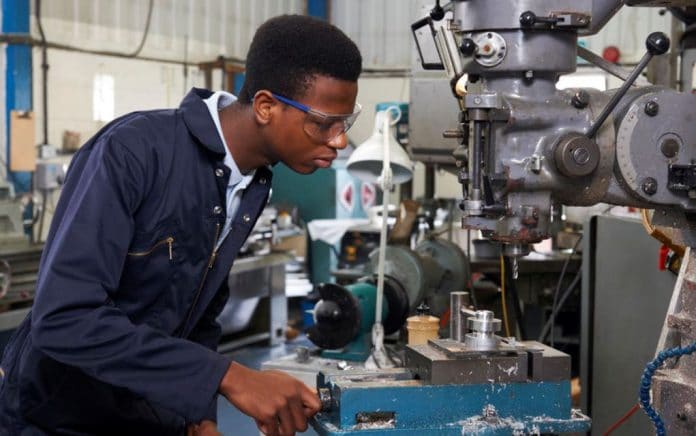
Production output fell by 0.5%, driven by a fall in the manufacture of motor vehicles, trailers and semi-trailers in this period. The decline follows a fall of 0.5% in the three months to September.
Construction output fell by 0.3%, compared with a growth of 0.1% in the three months to September 2025.
The latest figures will be a blow to the government which has placed growth at the heart of their plans.
A Treasury spokesperson said:
“We are determined to defy the forecasts on growth and create good jobs, so everyone is better off, while also helping us invest in better public services.
“That is why the chancellor is taking £150 off energy bills, protecting record investment in our infrastructure, and we are backing major planning reforms, the expansion of Heathrow and Gatwick airports, and the construction of Sizewell C.”
The Conservatives’ Shadow chancellor Sir Mel Stride said the lead-up to the Budget in November was to blame for the economy shrinking, due to the leaks and hints about potential tax rises.
He added: “For months, Rachel Reeves has misled the British public. She said she wouldn’t raise taxes on working people – she broke that promise again. She insisted there was a black hole in the public finances – but there wasn’t.”
Expects react to GDP shrinking in October 2025
Stuart Morrison, research manager at the British Chambers of Commerce, said:
“There’s little festive cheer for businesses in the latest GDP data, as the economy unexpectedly shrank in both the three-month period and October itself. Firms are left waiting for an unlikely Christmas miracle on growth.
“The data paints a particularly worrying picture on the services sector, which is usually a real strength of the UK economy.
“The BCC’s latest economic forecast, published yesterday, shows 2026 will be another challenging year with limited growth, low levels of business investment, exports slowing and
“The Budget didn’t hit all firms with another general tax hike, but the chancellor’s statement was a missed opportunity on growth levers.
“Next year must be the moment the government works with business to unlock growth, with a particular focus on both boosting trade and helping firms embrace AI. It’s also crucial that the welcome ideas in the recent industrial, trade and infrastructure strategies are delivered, rather than just remaining words on a page.”
Mike Randall, CEO at Simply Asset Finance, said:
“A small dip in growth in October underlines a simple truth: even in the face of relentless speculation and negativity ahead of the Autumn Budget, SMEs kept pushing forward.
“But with smaller firms still calling for support with energy bills a year on, that determination can only stretch so far before margins become unsustainable.
“To unlock the next phase of growth, we now need practical measures that ease cost pressures, back investment, and create an environment where entrepreneurial ambition is rewarded. Give SMEs the confidence and the tools, and they will do the heavy lifting for the UK’s recovery.”
James Bentley, director at Financial Markets Online, said:
“Britain’s economy has been lit up, not with festive sparkle but by warning lights.
“Cooling has turned into contraction, and at this rate the Christmas interest rate cut will get a sequel by February.
“Things have gone from bad to worse for manufacturers, with sector output shrinking by 0.7% in the three months to October. The construction sector, often seen as a barometer for broader business confidence, also contracted by 0.3%. Private sector housebuilding – the photo opp of choice for chancellors – shrank by a humiliating 2.4%.
“Meanwhile the UK’s huge service sector, engine room of the economy, idled with zero growth.
“With unemployment up at 5% and the economy sliding, the question now isn’t whether the Bank of England will cut interest rates next week, it’s how big will the cut be?
“While the markets have been expecting a 0.25% cut for weeks, there’s now a possibility of a supersize 0.5% cut.
“The Bank is confident that inflation, though still high at 3.6%, has peaked – and its entire focus is now on stimulating the moribund economy.
“Even if we don’t get a double cut next week, the chances of a further base rate cut coming in February have risen sharply.
“Cue a screeching U-turn for the Pound, which had been on a winning streak against the Dollar this week. Sterling has plunged deep into the red and UK equities are rattled.
“If the data from the month before the chancellor’s tax-raising Budget was this bad, how much worse will the November and December numbers look? Cheerio Christmas cheer.”
Jonathan Moyes, head of investment research at Wealth Club, said:
“The government and the chancellor spent much of their time sapping what little confidence the UK economy had left in October. So it is not unsurprising to see the economy not only stagnate, but contract in the month before the budget.
“Confidence is a key ingredient for a thriving economy, it is a shame to see it given away so freely to mask political choices. For comparison, US GDP growth in Q3 is expected to come in at a blistering 3.8%. The UK is firmly in the global slow lane.
“Looking ahead, a well known saying springs to mind, “to understand a country’s future, look at its youth”, well, within the UK it’s young are leaving by their hundreds of thousands.”