

This post was originally published on this site.
A long-hidden masterpiece by a Flemish artist has been brought to light after a chance rediscovery.
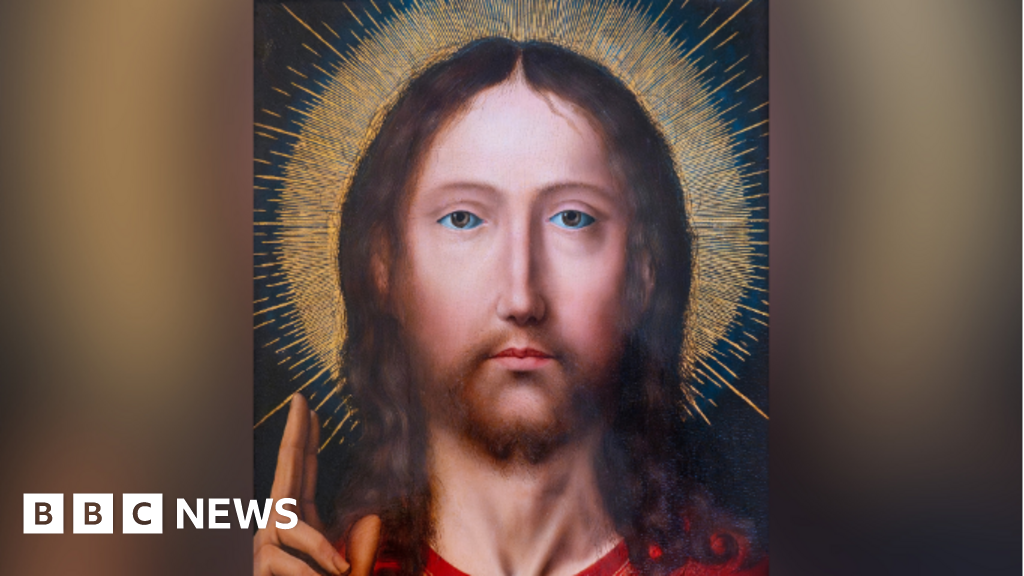
Christ Blessing by Quentin Massys, dating from about 1500, used to hang behind the altar in the community’s chapel of Campion Hall, the Jesuit home for research and study at the University of Oxford.
Leading Flemish art authority Dr Maximiliaan Martens confirmed its under-drawing and composition matched the master’s own working methods.
The artwork has now moved on long-term loan to the Ashmolean Museum, where it is attributed as Quentin Massijs and Workshop.
Christ Blessing at the Campion Hall was discovered by National Gallery staff overseeing the hanging of another painting.
Advanced techniques such as infrared imaging were used during the investigation into the masterpiece’s origins.
Quentin Matsys worked in Antwerp, Belgium, more than 40 years until his death in 1530.
However, research over the past three years concluded that he himself may have had a more direct hand in the work than previously thought.
Campion Hall said the Matsys studio in Antwerp produced many versions of Christ Blessing with the image becoming “something of a bestseller for the thriving business”.
One of the versions, which was at first considered unremarkable, aided the £2m renovation of Holy Trinity church in Bradford-on-Avon, Wiltshire.
The hall said the revised attribution to Massys had led to a discussion “about the painting’s artistic and spiritual importance”.
It was decided that it should be available to a much wider audience.
The identity of the painting was revealed during an event in November.
Master of Campion Hall Dr Nick Austin SJ said: “To stand and pause before this painting is not only to admire its beauty or the virtuosic skill of the Master’s hand, but to risk being transformed.
“Our hope is that, in its new home, many more people will spend time contemplating this image of the Blessing Christ and dare to meet the gaze of the One it so powerfully reveals.”