

This post was originally published on this site.
Helen Catt,BBC political correspondentand
Jenny Sneesby,Political reporter

A law to tackle the smuggling of puppies and kittens into Britain has passed Parliament this week, after two previous attempts failed.
Animal welfare charities say it’s a game-changer, but could there be some unintended consequences?
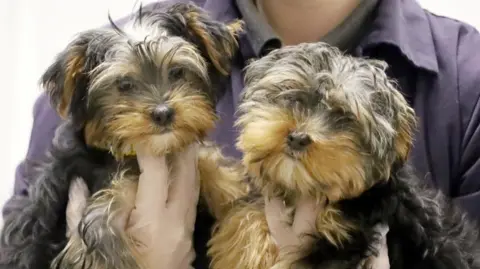
In September 2025, two tiny Yorkshire Terriers were seized at the Port of Dover.
Just seven weeks old, they had spent 26 hours in a box on the back seat of a car travelling from Slovakia, with little access to food or water.
They were named Pip and Squeak by Dogs Trust, which took them in.
“They were quite shut down and a little wary of everything,” said Katie Bryan, the charity’s Rehoming Coordinator.
“It was clear that being taken from their mum too early had left them not really knowing how to be dogs or how to interact with humans or the world in general.”
Politicians have been promising to crack down on the illegal puppy trade since leaving the EU made it possible to unilaterally change import rules.
In 2023, 116 puppies and kittens were seized at the Port of Dover and quarantined for being below the legal age limit of 15 weeks.
Many are brought in with false documents or with microchips giving fake details hidden in their collars. Others are falsely passed off as pets.
Identifying smuggled animals coming through Dover is the responsibility of Matt Henning’s team at the Animal and Plant Health Agency.
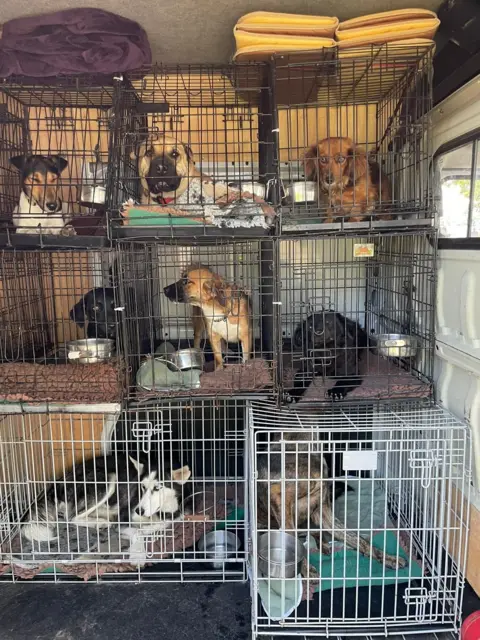
He said some animals arrive in “horrendous situations” after being loaded into vans or cars loose or in homemade cages.
“We’ve had them up against raw meat, up against motorbike wheels, we’ve had them under drivers’ seats then they’ve been caught in the frame of that.”
He said it can be upsetting for his team, who also often face challenging behaviour from the people bringing animals in.
 Animal and Plant Health Agency
Some animals can be left so unwell they have to be put down.
Matt remembers one dog from Romania who arrived “barely responsive” after smugglers had tried several different ways of bringing it into the UK.
“It had a nappy on it to absorb urine and faeces. One of its legs was bandaged up so when it got on the veterinary treatment table, it was a raw stump. The vet said it was suffering beyond imagination.”
Illegally imported dogs may also not have been tested for diseases like rabies or brucella canis, which can put animals in the UK, and their owners, at risk.
The new law will raise the age limit for importing puppies and kittens into Great Britain to six months.
The Animal and Plant Health Agency says that will make it easier to identify underage animals and will put a “blocker” on the trade because older puppies are simply less cute.
Some support the principle of the new age limit, but warn it could have unintended consequences.
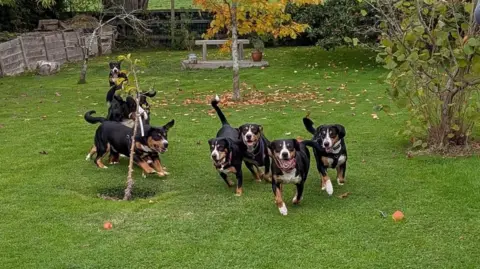
Rosemary Kind chairs the Entelbucher Mountain Dog Club of Great Britain, and says they need to bring puppies into the country because “the gene pool is so small” that if they only bred from those here they risked introducing “health conditions that we’d rather not have in the breed”.
She said waiting until a puppy was six months old to import would push up the cost significantly and wasn’t practical.
“These are not puppy farms that we’re getting dogs from. They’re people who bring up dogs in their own homes. It’s a big ask to ask them to keep the dog for that length of time”
She said other methods, such as bringing in stud dogs or importing semen were either impractical or carried more health risks, and she is working with The Kennel Club to call for exemptions for specialist breed puppies.
The new law will also ban dogs who have their ears cropped or tails docked from being imported into Great Britain at any age.
Ear cropping , which involves removing all or part of a dog’s ear flap, is illegal in the UK.
Despite that, Lib Dem MP Danny Chambers, who got the new law through Parliament, said it was something he often saw when he worked as a vet.
He warned it could lead to infections and behavioural problems.
“Obviously if you’ve just had your ears cut off with no anaesthetic you don’t want anyone to touch your head ever again and it’s so common for somebody to just pat a dog.”
He said it also made dogs appear more aggressive to other dogs because they “communicate through body language” often using their ears and tails.
Earlier this year, Louise Nicholson Hume adopted Betty, a cane corso, whose ears had been cropped and tail docked in Romania before she was seized at Dover for being under-age.
“We knew the reactions we were going to get,” she said “but we didn’t mind as long as she was happy.”
She said Betty had been “absolutely terrified” when she first arrived.
She says Betty is now “very eager to learn. She snores but other than that she’s really quite incredible”.
Again, though, there are some who claim the new rules will have other impacts.
 Chris Platt
Linda Demetriou, who runs the charity Stronger Together Animal Rescue that rescues and rehomes dogs from Cyprus, says the ban will stop her helping animals who have already been mutilated abroad, and calls for exemptions for rescue dogs.
“Abused dogs we find with these conditions will live life in a cage as we will not be able to rehome them to a loving home.”
But animal welfare charities worry that any carve-outs would be exploited by smugglers to continue trading, and would see those who illegally mutilate dogs in the UK avoid prosecution.
David Bowles from the RSPCA said: “The most common thing that happens when we go and interview somebody who’s illegally cropped [a dog’s] ears is they say ‘don’t worry I imported the dog last week’.
“By stopping that import they will no longer have that excuse and I think that will dramatically aid our enforcement work on the ban.”
The government is working with the devolved administrations in Scotland and Wales to pass some additional legislation which is still needed before the measures can come into force.
Any exemptions would be decided as part of those regulations.
And if you’re wondering what happened to Pip and Squeak, there is a happy ending.
They’ve both got new homes and new names: Elsa and Skye.
Their owners say they’re settling in well.