

This post was originally published on this site.
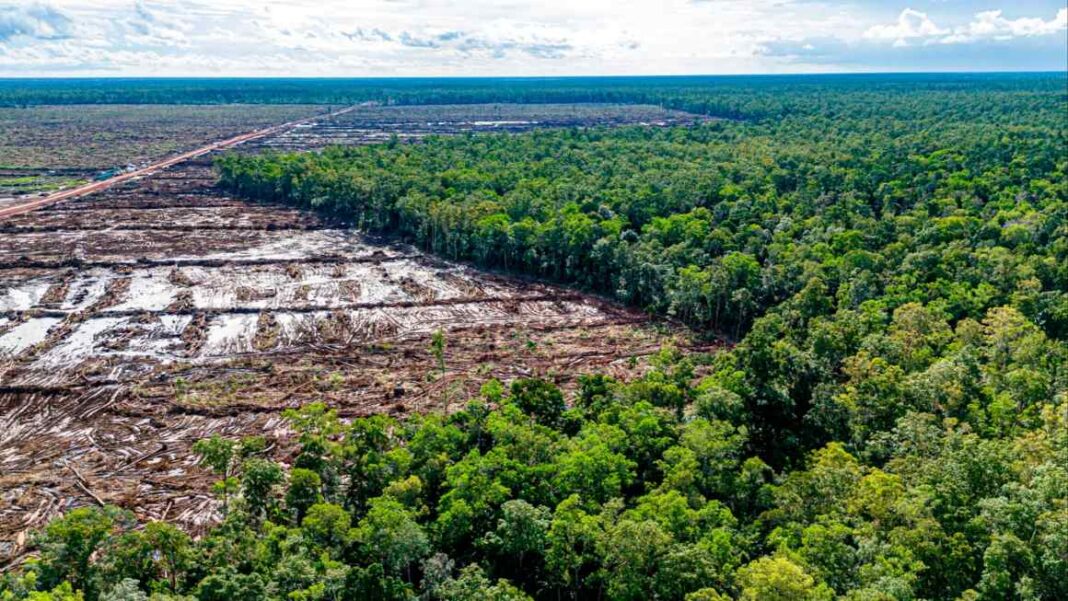
Indonesia is clearing forests at a rapid pace with military assistance in one of its most biodiverse regions for a state-backed agricultural project, even as recent fatal floods have illustrated the dangers of deforestation.
Billed as a project to ensure the fourth most populous nation’s food and energy security, Indonesia is planning to cultivate rice and sugar on 3mn hectares in the eastern province of Papua. The area covers a mix of primary forests, grasslands, woodlands and wetlands.
It will ultimately be five times the size of London and bring irreversible environmental consequences, worsen greenhouse gas emissions and reverse the south-east Asian country’s progress over the past decade in slowing deforestation for palm oil production.
A former general is overseeing the project, and five battalions have been placed in Papua to support the government’s food security initiatives in the province.
Residents and local activists say soldiers are involved in the clearing of forests and eviction of residents, in addition to providing security. Some soldiers have posted videos on TikTok posing with excavators and regular patrols.
Military posts have also been set up near food estate developments, according to the residents and satellite imagery analysed by the FT.
“Since the clearing of the forest, the military has been actively involved,” said Ariston Moiwen, a resident in the South Papua town of Merauke, whose family land has been taken over for rice cultivation. “The military operates the heavy equipment too,” said Ariston, who still lives nearby.
Between May 2024 and November 2025, more than 40,000 hectares of land were cleared, according to a Financial Times analysis of satellite imagery.
While a fraction of the total being razed, the pace has been swift. Most of the land cleared so far is being prepared for sugarcane, which will also be used to produce bioethanol.
“It’s hard to justify this project from any perspective . . . environmental, climate and the wellbeing of local communities,” said Glenn Hurowitz, chief executive of environmental group Mighty Earth.
The so-called food estate project stands in sharp contrast to the climate pledges that President Prabowo Subianto has made to achieve net zero emissions before 2060, and his public comments in the aftermath of floods in recent weeks that claimed more than 1,000 lives in Sumatra.
Environmentalists, scientists and even government officials say the loss of forests for mining and palm oil production and resulting soil degradation on Sumatra island exacerbated the flooding and deadly landslides.
Prabowo vowed action after touring the devastated areas, threatening fines for companies in breach of permits. “Climate change, global warming and environmental damage. These are issues we must confront,” he said. “We must truly prevent the cutting down of trees and the destruction of forests.”
But late last year, he said claims about deforestation should not deter the expansion of palm oil plantations. “I think in the future, we also need to plant more palm oil. Oil palms are trees, right? They have leaves, right? So why are we being accused [of deforestation]?”
The government has already revoked the “forest area” status for hundreds of thousands of hectares in Papua to allow the protected areas to be converted to agricultural development, conceived under former President Joko Widodo.
Natural ecosystems in Papua had previously remained largely intact because of its remoteness and the presence of indigenous communities.
But that is now under threat, with another part of Papua also being developed for contentious nickel mining.
Indonesia is the world’s fifth-largest emitter, based on CO₂ emissions, of about 660mn tonnes from fuel combustion, according to the International Energy Agency.
A government-sanctioned feasibility study dated July 2024, seen by the FT, estimated emissions of 315mn tonnes from the land clearing, but independent groups have forecast more than double that amount.
The study, conducted by Indonesian inspection group Sucofindo, also acknowledges that the rice fields will overlap with protected forests, wildlife sanctuaries and nature reserves. Papua is home to rare birds, tree kangaroos and other endemic species.
It says the development will result in increased temperatures, disruption to water systems and soil degradation. Sucofindo did not respond to a request for comment on its report.
Indonesia has said it planned reforestation over 12mn hectares to mitigate possible negative impacts from the food estates.

A former military general, Prabowo has made food and energy security one of his priorities.
But campaigners say Indonesia does not need to sacrifice its nature to expand food production. “The major agricultural industries in Indonesia have shown that it is possible to expand by focusing on productivity improvements and their expansion on degraded lands, instead of bulldozing intact rainforest,” said Hurowitz.

The development also involves a massive infrastructure effort: a 135km road, a seaside port and a new airport. About 59km of the road has been completed as of November after construction began in July 2024.
The project is being led by two Indonesian companies. The Jhonlin Group, a coal miner and palm oil producer, is developing the rice fields, and ordered 2,000 excavators from China to be used for the Papua project.
The Merauke Sugar Group is leading the sugarcane cultivation. The companies did not respond to requests for comment.
US chocolate maker Hershey has suspended both companies from its suppliers list because of their involvement in the Papua project, according to a grievance log published on its website.
Prabowo has expanded the military’s role in civilian affairs since coming to power last year. Soldiers are also actively involved in the president’s flagship plan to provide free meals for schoolchildren.
“The Indonesian National Armed Forces are working in the field with full weapons . . . some are holding long firearms. So, when landowners want to protest, they are afraid,” said Ambrosius Mulait, a researcher from Pusaka, a group advocating for indigenous rights.

Yusuf Jauhari, a defence ministry official overseeing the defence logistics agency, told the FT that the military presence was not intended to intimidate local communities. Patrols were part of standard operating procedures in maintaining the security of national strategic projects, he said.
“The presence of [military] personnel in the area around the project is part of the implementation of territorial development tasks and support for the national food security programme, as mandated by the government,” Yusuf said.
Indonesia has attempted similar state-backed agriculture projects before, but they have largely failed. A project on Borneo island was abandoned after clearing swaths of forest, as the soil turned out to be unsuitable for planting rice.

Some experts say the Papua project will face similar issues. Southern Papua’s wetlands have high acidity which is not conducive for rice, said scientist David Gaveau from The Tree Map, a geospatial company researching deforestation.
“If peat soils are present, rice farming will be even more difficult, as their high acidity and low fertility create a harsh environment for crops,” Gaveau said.
Several environmental and indigenous groups have called for the project to be halted. “These are carried out without due diligence and consideration of ecological balance, natural resource sustainability, and the continuity of intergenerational rights,” said Pusaka executive director Franky Samperante.
“They ignore the rights of indigenous communities, simply for the economic benefit of a handful of corporations.”
Climate Capital

Where climate change meets business, markets and politics. Explore the FT’s coverage here.
Are you curious about the FT’s environmental sustainability commitments? Find out more about our science-based targets here