

This post was originally published on this site.
Dafydd James was a fine rugby player for the Wales and Lions but his life has been challenged by mental health issues
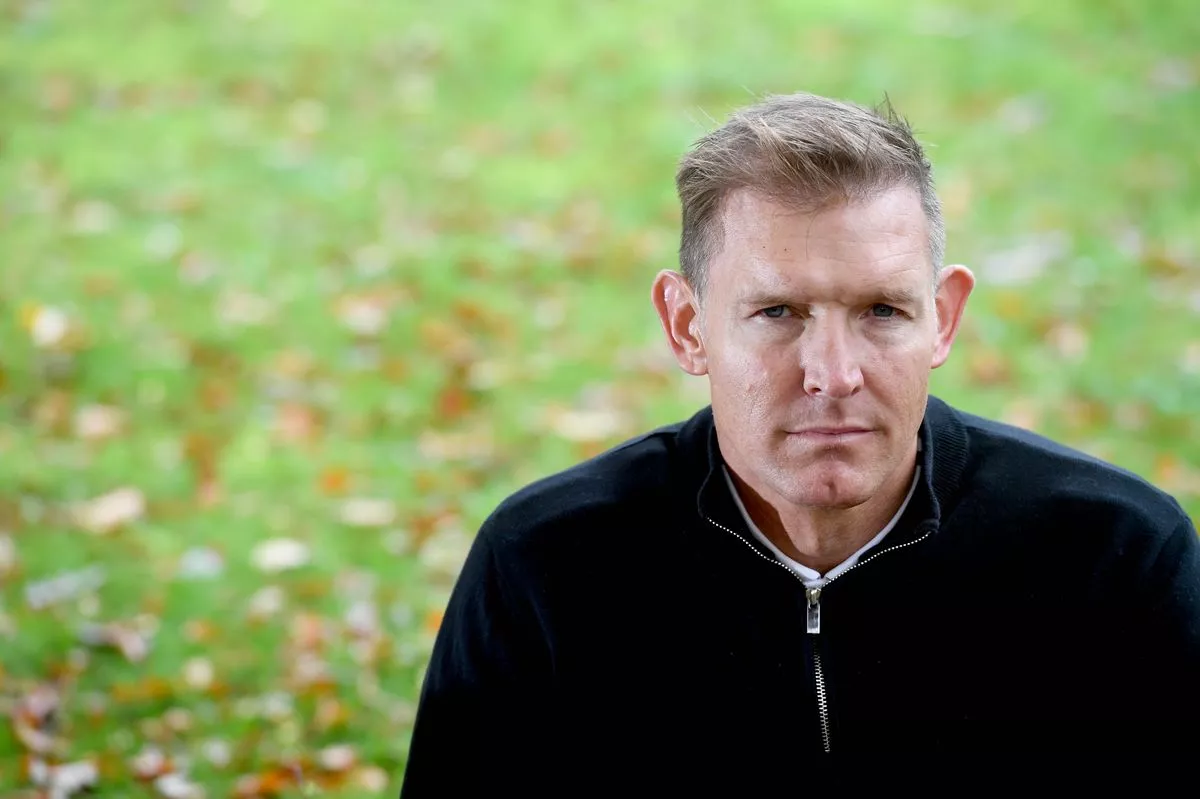
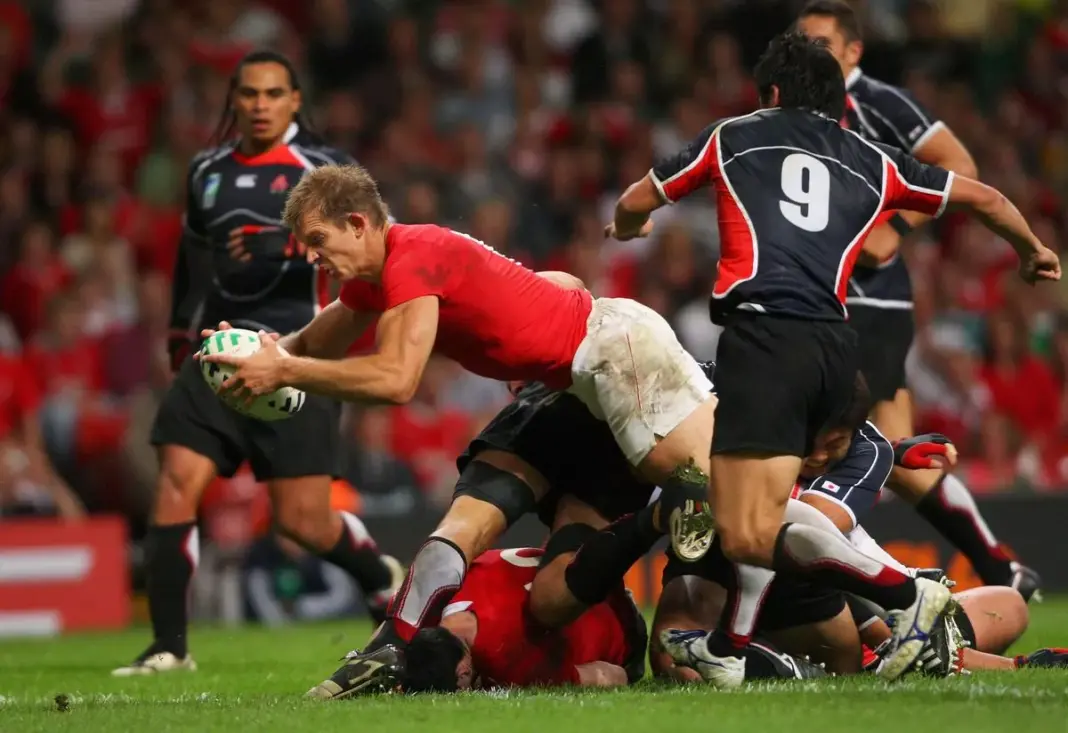
Dafydd James achieved much as a player, winning 48 caps for Wales, playing in all three Test matches for the British & Irish Lions against Australia in 2001 and enjoying a glittering club career.
But it was also a career which endured its fair share of setbacks, from getting kicked out of the Wales squad in 2002, to the overnight demise of the Celtic Warriors and having his contract terminated suddenly by the Scarlets. James showed tremendous resilience in bouncing back stronger from each setback but, undoubtedly, his biggest challenge has been fighting depression.
Around one in 10 men in the UK struggle from depression or anxiety and while the stigma attached to mental health issues is not what it once was, there remains a long way to go, especially in the world of professional rugby union.
James has recently released a book alongside author Trystan Bevan called Offloading: Tackling My Truth where he tells the life story he hopes can help others struggling.
“It talks about the challenges of coming to the end of different stages of your life,” James tells WalesOnline.
“Once you are caught up in that spiral and that dark hole it is very difficult to get out of. It’s hard and not nice. Loads of people suffer with depression and they say over 50% of the public will suffer some mental health challenges along the way, whether that be anxiety, depression, bereavement, loss.
“I wanted to come out and say I’ve come out the other end.
“It’s a pertinent topic in this crazy world where everyone is craving attention and likes while trying to showcase what money and what cars we’ve got.
“Internally we are all going through our own little battles. I probably would have liked to talk about it a little bit more but I’ve got to be careful because it is quite raw and it is quite blunt about some of the things I’ve done which will upset people.
“I’m open and quite candid about it and I think more people should be talking about it.
“I suffered a long time, especially when I got injured as a player when you can’t perform to the best of your ability and your own expectation.
“My divorce was also a big factor, while I also fractured my neck and lost my career and identity essentially.
“There were also financial worries on occasions. Not being able to work or get a job, a lack of support and vulnerability.
“When you talk about depression and anxiety there were some horrible thoughts I had and things I did.”
Two years ago, James was diagnosed with early onset dementia and probable chronic traumatic encephalopathy, a degenerative brain condition. It was news that in some way gave him an explanation for why his troubles have perhaps been exacerbated over the years.
He suffers from extreme headaches and sleep issues on top of the panic attacks and anxiety that have blighted his life and is part of the ongoing lawsuit, alongside the likes of Ryan Jones and Alix Popham, against rugby’s authorities.
Despite the emotional rollercoaster that is professional rugby and the troubles he has suffered, James looks back at his career with fondness.
The 50-year-old was born in Zambia and spent much of the early part of his life in South Africa after his dad, a chartered engineer from Kenfig Hill in Bridgend, took up a job in Secunda in North Eastern Transvaal.
James started playing rugby in South Africa before the family returned to Bridgend just before he started comprehensive school.
His first taste of top class rugby came with Bridgend where he forced his way onto the Wales tour of Australia in 1996.
“I went on the tour in 96 and won my first cap. I played nine out of the 11 games and did well,” he recalls.
“I replaced Nigel Davies and I was put on the wing when I was marking David Campese. The centres weren’t too bad either because it was Jason Little and Tim Horan.
“We had a torrid time and it was a real baptism of fire because we were still streets behind the top nations. We hadn’t really embraced professionalism.”
James went on to excel at Test level under Graham Henry and was one of the best finishers in the Northern Hemisphere at the time.
The powerful wing played in the Wales side which suffered a record 96-13 defeat to South Africa in Pretoria in 1998 but also became a key player under Henry who was dubbed “The Great Redeemer” for turning around the fortunes of an ailing rugby nation.
Wales won in Paris for the first time since 1975 and famously beat England at Wembley, while they also became the first European nation to win a Test series in Argentina.
“Everything which could have gone wrong in Pretoria went wrong and we were just fortunate it wasn’t a hundred points,” said James.
“That’s when Graham Henry was called in.
“Whenever you get a hammering it is hard and you almost have to embrace the negatives and go how do we learn from that.
“Within four months we played South Africa at Wembley and we should have beaten them. We were winning but a streaker came onto the field and it took all the momentum away from us.
“Graham had brought in a few players like Shane Howarth and Brett Sinkinson.
“There was a guy there called Steve Black who was very instrumental as well. Graham Henry was very structured with his books and his letters. There were copious amounts of moves.
“But Steve would instill that self belief, that drive, that want, that ability to nurture and man manage players.
“He was the conduit and it worked.
“He brought out the best of the Quinnell boys and players like myself who would often be questioning themselves.”
But things turned sour when Steve Hansen replaced Henry. An infamous incident that saw James leave the team hotel for just one night changed the trajectory of his career.
“Steve didn’t like me for whatever reason,” he said.
“He came in and he was pointing the fingers at the wrong people but his legacy speaks for itself.
“They named the hotel the Jail of Glamorgan because we were there all the time.
“One evening I wanted to go home and spend some time with my first son Aled. I looked at the itineraries which told us what to wear and what times the meetings were.
“I planned to get back to the Vale before 7.30am just in case anything changed. Nobody is going to be training before 7.30am.
“As I’m coming into the hotel I park my car and I had this eerie feeling where I thought ‘hang on now this guy doesn’t like me what’s going to happen.’
“I thought I would box clever just in case so I grabbed my laptop and I’d go down to the hotel, flick through a couple of moves and have a look at things.
“I struggled to sleep in hotels because it’s not your bed and you are sharing with someone else.
“So, I’m walking down to the hotel and he comes out and asks me where I’d been. I said I’d just been up to my car.
“I went to my room but he went up to my car and felt the bonnet which was warm.
“He pulled me out of the room and said you went home and I’m kicking you out of the squad.”
As a result James spent a couple of years in the international wilderness.
“An emergency meeting was called but the irony is there were about eight players who weren’t even in the meeting who had done the same thing.
“Ben Evans stuck up for me and told Steve it was a bit harsh but it didn’t work.
“During the meeting there were literally squad players still in their beds in various parts of Wales.
“He announced it in front of everyone in the room saying I broke a curfew and I was dropped.
“There was clearly a whistleblower in the squad because the press were on the phone within half an hour.
“Yes, nobody is above the team but it was very harsh.
“If you want to get the best out of people you have to treat them in the right way.
“Yes, you aren’t there to mollycoddle people.
“He just didn’t want to understand me and was a very obtuse and awkward character.
“He’s not on my Christmas card list but what I do respect is that he did bring some discipline into a team that wavered a little bit.
“He used to make us clean the changing room to make sure we left it as we found it, which I quite liked.
“But I didn’t like that he picked out one person because we should have all been in it together. If you want to go forward as a team you need respect for everyone.
“It probably cost me a place in the 2005 Grand Slam-winning team.”
But such was James’ quality as a player and his professionalism he eventually fought his way back into the squad and was parachuted straight back into the starting XV by Mike Ruddock as Wales beat Australia in 2005.
James, who could play on the wing and in the centre also enjoyed a colourful club career and after leaving the Brewery Field for Pontypridd he played in the infamous Battle of Brive where the Welsh club narrowly lost to the then European champions amid violent scenes which spilled over into the after-match function.
“It was mad!,” he said.
“It was like playing in a colosseum and it was very intimidating.
“It was like playing in a cage.
“When we were coming out of the tunnel they were booing, jeering and spitting at us.
“We came up short because the referee decided it was a try and that he needed to get out alive. Jonathan Davies’ quote that he bottled it was right.
“It spilled over into the evening.
“It was carnage and a dangerous environment. Luckily nobody was really hurt but there were a few stitches and black eyes.
“It was a full on 30-man brawl. It was wild!
“There were chairs flying around and glasses being smashed. It was crazy. The shutters had been pulled down and it was wild.
“The police arrived and the boys had to go to court the following day.”
James soon moved on to play at Llanelli who back then were Welsh rugby’s flag bearers in the old Heineken Cup. He singles out Llanelli’s 31-28 defeat to Northampton Saints courtesy of a last-gasp long-range penalty from Paul Grayson in the semi-final of the Heineken Cup back in 2000 as a big regret.
“We were playing with our backs and carving them up,” he said.
“For the first 30 minutes we tore them to shreds. That particular day Llanelli fans painted Reading red. The Northampton lot were very quiet but the Scarlets lot were insane.
“It really was one that got away due to a moment of madness from Ian Boobyer kicking the ball out of Matt Dawson’s hands.
“Paul Grayson stepped up and kicked the winning penalty from halfway.
“I firmly believe that if we had got to the final we would have won it. That was how good we were but we changed the dynamic of the game at half-time in that Northampton match.
“We were winning the game comfortably but then we got drawn into an arm wrestle. It was devastating.”
One of the most bizzare moments of his career came when former Welsh Rugby Union CEO David Moffett decided to axe the Celtic Warriors after just one season.
“We had a reasonable season considering we were training in cabbage patches.
“We trained in Pencoed and in Tondu on a public playing field. It was bonkers some of the things we were doing.
“It was like we’d taken ideas off the back of a fag packet.
“We then set up a base in Pencoed Agricultural College which is now Bridgend College.
“Within a year Moffett said the club is not financially viable and I’m going to shut it down.
“He was very abrasive and it was a very sad day for Welsh rugby.
“Welsh people need an identity and a club to follow. If you look at anything in Wales it is all about villages going back a thousand odd years.
“You can’t eradicate that because it is in your blood. He closed us down overnight. A lot of people lost their jobs.
“He called us into the Vale. We were all sat there with the backroom staff and all of a sudden he said, as of tomorrow, there are no Celtic Warriors because it isn’t financially viable.
“It was at the same time all of the other four regions were cherry picking the players. They were in another room picking the players off.
“In the 12th hour I had an offer to go to Harlequins and also one from Toulouse but I chose to go to England.”
Ultimately, Dafydd James’ story is one of courage and character — a player who gave Welsh rugby unforgettable moments and a man now using his voice and experience to make a lasting, positive difference far beyond the field.