

This post was originally published on this site.
Deep in the forest of Salta, Argentina, I watch a group of women in long floral skirts expertly wield machetes. Metal blades as long as my torso whizz through the dry air to make a clearing among the treacherous spiked palo borracho trees, and colossal cacti with finger-length needles. Slowly, methodically, they wrangle the chaguar, another perilous plant, and peel the sharp spines from its sword-shaped leaves with their bare hands. I begin to understand why the region was dubbed “El Impenetrable” by Spanish-speaking outsiders centuries ago.
I’ve come to Salta to learn about the weaving traditions of the Wichí, an Indigenous people of the Gran Chaco in South America who live primarily in northern Argentina. Weaving is a women-led,
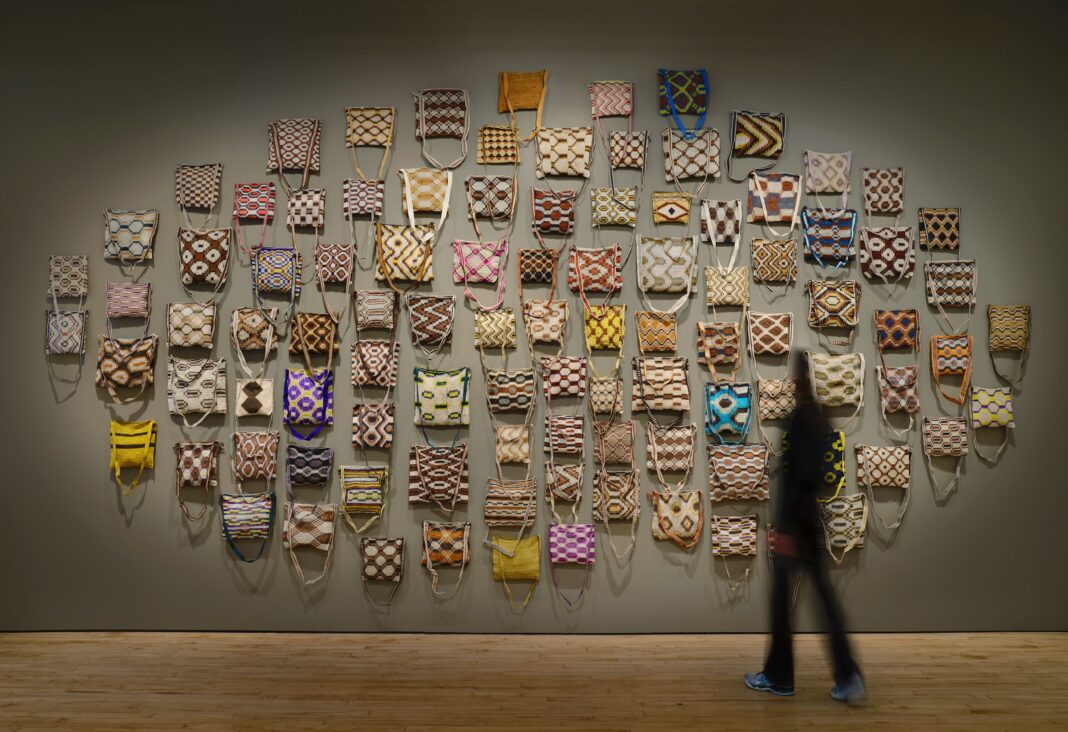
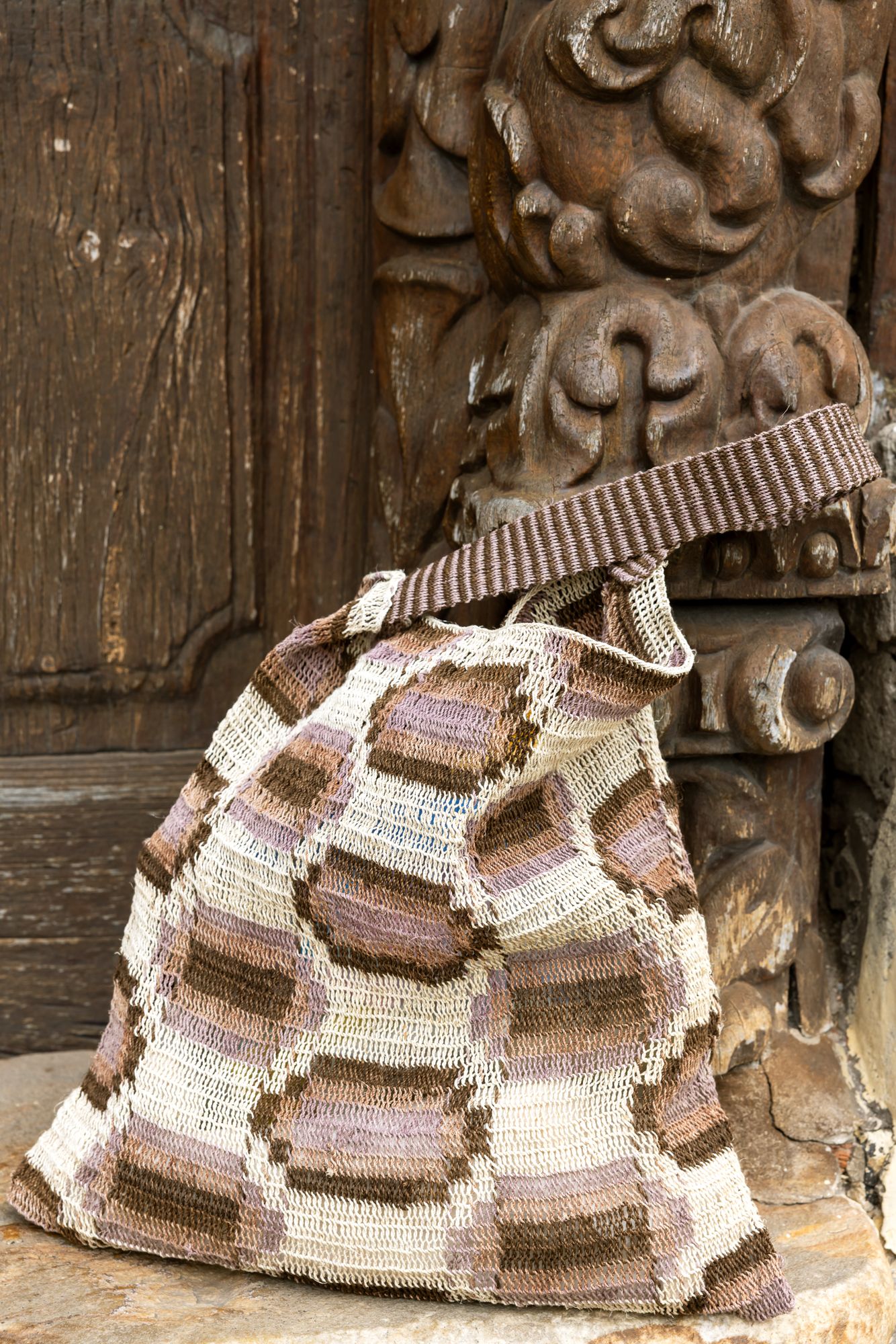
communal practice that begins here in the forest; one of the world’s most biodiverse places, this lowland region spans over 250 million acres, comprising forest, grasslands, savannahs, and wetlands. Using the fibers of the chaguar plant, a wild bromeliad native to Gran Chaco’s semi-arid landscape, Wichí women have woven fishing nets, clothing, textiles, small bags called yikas, and even armor during periods of war for generations. They rely on techniques passed down from their ancestors, weaving textiles with symbolic patterns drawn from the flora and fauna of the forest, which carry individual and collective stories, messages, and memories. It’s a nonverbal form of communication, creative expression, resistance, and cultural preservation.

For millennia, the Wichí were semi-nomadic hunter-gatherers and fishermen, moving seasonally throughout the Gran Chaco until the arrival of criollo settlers, missionaries, and the Argentine military, who began waging violent campaigns against Indigenous communities in the 1870s. Intended to exterminate and subjugate Indigenous populations throughout Argentina, these efforts also assisted farmers and cattle ranchers in acquiring and controlling land in the north of the country. Today, the Gran Chaco has one of the highest deforestation rates in the world, threatened by loggers and agricultural development—mainly cattle ranching and soybean cultivation—whose production is largely exported to international markets. Land grabs have displaced many Indigenous communities, forcing them into permanent settlements, in many instances far from the natural resources they once had access to. Once a utilitarian art form, weaving became an economic lifeline for women and their communities as they have entered a money economy. And in recent years, Wichí women have garnered international recognition for their work—the fruits of decades of organizing and empowerment in the face of complex social and environmental challenges.
From the small tropical city of Tartagal, which lies in the northeast of Salta province, weavers travel across heavily deforested terrain to procure chaguar plants to harvest. After a nearly two-hour drive, barren land gives way to lush native forest. We duck under a wire fence beside the road to reach the chaguareles (colonies of chaguar plants) located in the shade of a tree canopy where families of parrots sing. Alianza Wichí, a Tartagal-based nonprofit focused on cultural and environmental projects, worked alongside several local organizations to negotiate with a private landowner to allow the weavers to harvest chaguar on their property. I watch Elsa López, a weaver who now lives in Tartagal after her family was displaced from the forests of Torono, teach the ancestral harvesting techniques she learned as a young girl to her 22-year-old daughter, Ana Paola. Although she has never seen the chaguar plant before, Ana Paola doesn’t miss a beat, working swiftly in silence, as if hand-peeling thorny leaves is a skill she was born with.