

This post was originally published on this site.
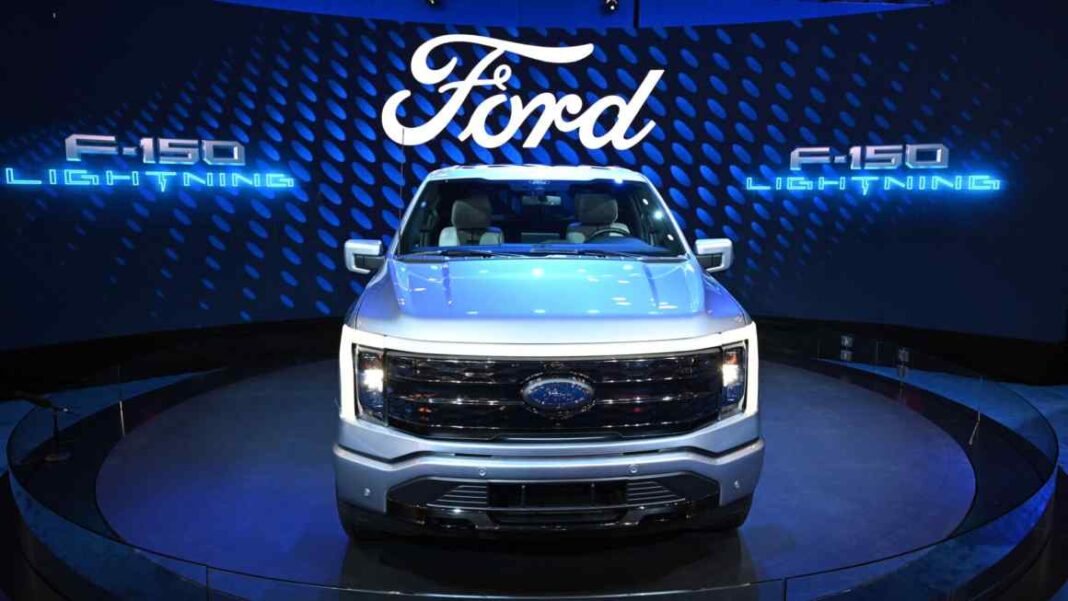
Ford chief executive Jim Farley declared his all-electric F-150 Lightning the “truck of the future” when it was unveiled in 2021. But this week the automaker’s flagship EV pick-up was consigned to the past as part of a spectacular $19.5bn writedown.
After its electric “Model e” division amassed more than $13bn in losses since 2023, the Michigan-based company’s tactical retreat was welcomed by Wall Street analysts and investors. Ford shares rose after Monday’s announcement, and are up almost 40 per cent this year as the company has pared back its EV ambitions.
“We expect the restructuring will help enhance the product portfolio, simplify operations and improve margins and free cash flow,” said Fitch Ratings analyst Eric Ause, noting that of the charges reported this week, “only about $5.5bn” would result in cash outflows.
Farley said this month that western automakers were in a “fight for our lives” amid growing Chinese EV competition. But he argued that pivoting to hybrid vehicles would allow them to generate profits to reinvest in future EV platforms when the market is ready.
With the Trump administration having recently eliminated a $7,500 consumer tax credit for EV purchases, as well as proposing to slash fuel efficiency requirements, some experts worry that the Detroit carmakers will face little incentive from the government, consumers or investors to make a renewed EV push.

Tim Bush, a Hong Kong-based battery analyst for UBS, said the slowing of the transition risked the US turning into the “Galápagos Islands of internal combustion engine vehicles”, making it a separate ecosystem characterised by a lack of innovation relative to the rest of the world.
“What we are seeing once again is short-term profit considerations being given precedence over long-term strategic moves,” he added.
Tu Le, founder of Detroit-based consultancy Sino Auto Insights, said the US car industry was growing increasingly vulnerable to a wave of foreign competition led by low-cost Chinese rivals that are storming other global markets — and which may not be kept out of the US forever.
“The automakers have much less time than they seem to think,” he said. “Now the same executives who bungled their first attempt at electrification are promising they will get it right next time.”
Ford rejects suggestions that it has botched its EV transition, arguing its losses were driven principally by unrealistic optimism across the industry about consumer demand for EVs.
“We are looking at the market as it is today, not just as everyone predicted it to be five years ago,” said Andrew Frick, the head of Ford’s petrol engine and electric businesses, this week.
Tom Narayan, global autos analyst for RBC Capital Markets, said US automakers had brought forward their expectations for EV demand growth in the early 2020s, amid low interest rates and a post-pandemic consumer spending spree that led to EVs “selling like hot cakes”.
But since then EV adoption has been buffeted by steep inflation and higher interest rates, as well as the effects of tariffs, vacillating government policy and inadequate fast-charging infrastructure in the US.
“The EV slowdown is not Ford’s fault,” Narayan stressed.
Ford insiders argue that the structure of the company means that its EV losses receive more scrutiny than those of its Detroit rivals because, unlike General Motors or Stellantis, it breaks down its financial results by business division.
GM said in November 2022 that it expected to have a “solidly profitable” EV business producing 1mn units a year by 2025. Instead, it has sold 144,668 EVs in the first three quarters of this year, recording a $1.6bn impairment charge in October.
But Bush of UBS said that specific decisions made by Ford’s leadership meant the EV slowdown hit the carmaker harder than its crosstown rival.
The weight and power demands of the F-150 Lightning meant it required a large, heavy battery pack with ultra-high energy-density cells and elevated fire risks, driving up costs and making it impossible for the company to deliver the vehicle at a price it initially promised.

Further, the Lightning’s cells were until this year provided by a plant wholly owned by its battery partner SK On. That meant Ford missed out on generous Biden-era federal manufacturing credits for battery producers, which would have mitigated its losses.
The economics of the Lightning “never stacked up”, said Tu Le at Sino Auto Insights.
“The only way the maths would have worked would have been if Ford had an unlimited supply of cheap un-tariffed batteries imported from China, but that was never going to happen.”
However, Narayan noted that despite its bruising experience of the past few years, Ford’s leadership had resisted pressure from some investors to ditch EVs altogether.
Ford’s joint venture with SK On will be scrapped, with an EV plant in Tennessee repurposed to produce petrol-powered pick-ups and a battery plant in Kentucky converted to produce batteries for energy storage. The next iteration of the F-150 Lightning will be an “extended range EV” hybrid.
“The F-150 Lightning is a groundbreaking product that demonstrated an EV pick-up can still be a great F-series,” said Doug Field, Ford’s chief EV, digital and design officer. “Our next-generation F-150 Lightning EREV will be every bit as revolutionary.”
It is also working on a new platform for smaller EVs and a partnership with Renault in Europe as it targets profitability for the Model e division by 2029.
John Bozzella, president of the Alliance for Automotive Innovation, a trade group representing the US auto industry, said that carmakers “need to invest and sell vehicles that customers want right now, while preparing for a future that will inevitably include more hybrids, EVs and super-efficient gas vehicles. That’s what’s happening.”
But UBS’s Bush said the risk was “not just lagging the Chinese, who can be kept out of the US market. The risk is lagging the Koreans, the Japanese, the Europeans and the American EV companies as well.”