

This post was originally published on this site.
In today’s competitive market, effective customer loyalty software solutions can greatly improve your business’s retention strategies. These platforms, like Open Loyalty and Smile.io, offer customizable rewards programs that cater to various customer preferences. By featuring omnichannel support and AI-driven personalization, they help create engaging experiences. Comprehending the key features and advantages of these solutions can guide you in choosing the right fit for your needs. Consider the implications for your business as we explore the details further.
Key Takeaways
- Open Loyalty offers flexible API-first design, gamification features, and scalability options suitable for various business needs.
- Smile.io provides a user-friendly points-based loyalty program with quick integration and customizable tiers for enhanced customer retention.
- Effective loyalty programs can increase customer retention and spending by 10-20% through tailored rewards and personalized experiences.
- Leading loyalty platforms emphasize omnichannel support and AI-driven personalization to improve customer engagement across multiple touchpoints.
- Hybrid loyalty systems balance initial and ongoing costs, allowing businesses to customize solutions while leveraging existing technology.
Importance of Customer Loyalty Programs

When you consider the costs associated with acquiring new customers, it becomes clear why customer loyalty programs are essential for businesses. Acquiring a new customer can cost five times more than retaining an existing one.
By implementing effective loyalty programs, you can greatly boost customer retention and spending. This is where the best customer loyalty software comes into play, facilitating the creation of rewards programs that not just keep customers engaged but also transform them into brand advocates.
Comprehending how to create a rewards program customized to your audience can improve overall customer lifetime value (CLTV). Companies leveraging the best loyalty program software often see revenue increases of 10-20%, showcasing the tangible benefits of prioritizing customer loyalty.
Key Features of Leading Loyalty Platforms
Top loyalty platforms come equipped with a variety of key features aimed to improve customer engagement and retention.
When considering how to create a rewards program for customers, you’ll find that leading solutions offer:
- Omnichannel Support: Engage customers seamlessly across web, mobile, and in-store platforms.
- AI-Driven Personalization: Tailor experiences based on individual behaviors and preferences, enhancing effectiveness.
- Flexible Reward Rules: Design customized loyalty programs using points, tiers, and referral systems that align with your brand.
The best loyalty software furthermore incorporates gamification mechanics, like achievements and leaderboards, which motivate customer participation.
With real-time analytics and integration capabilities, you can scale effectively as you gain insights into customer behavior and program performance, making your rewards company more competitive in the marketplace.
Hybrid Approaches to Loyalty Systems
When considering hybrid approaches to loyalty systems, you’ll want to weigh the benefits of custom solutions against off-the-shelf options.
API-first platforms provide a flexible foundation that allows you to create customized customer experiences during still utilizing existing technology.
It’s essential to assess the total cost of ownership, as this will help you understand both initial investments and ongoing operational expenses.
Custom vs. Off-the-Shelf
In evaluating loyalty systems, businesses often find that a hybrid approach, which combines custom-built solutions with off-the-shelf software, offers significant advantages.
This method allows you to benefit from the best of both worlds, ensuring flexibility during leveraging established solutions.
Consider the following benefits of a hybrid approach:
- Tailored Features: Custom systems can align closely with your brand’s specific goals and customer needs.
- Quick Implementation: Off-the-shelf solutions provide a faster setup, allowing you to launch loyalty programs without delays.
- Cost Efficiency: Lower upfront costs with off-the-shelf options can be appealing, but remember to assess the total cost of ownership for long-term sustainability.
API-First Advantages
API-first platforms provide significant advantages for businesses seeking to improve their loyalty systems through a hybrid approach. They offer flexibility, enabling you to build custom loyalty features that meet your specific needs without being limited by standard solutions.
With extensive integration capabilities, like Open Loyalty’s 250+ API endpoints, you can easily connect your existing systems, such as CRM and POS, facilitating a seamless experience. This hybrid model allows your loyalty programs to evolve as your business grows, ensuring scalability and responsiveness to market changes.
Additionally, customizable rules engines empower you to design personalized reward structures that resonate with your customers, enhancing their engagement and retention, in the end leading to a more effective loyalty strategy.
Total Cost Considerations
Reflecting on the total cost of ownership (TCO) for loyalty systems is crucial, as it encompasses not just initial setup expenses but furthermore ongoing maintenance and integration costs.
[embedded content]
A hybrid approach can help you balance these costs effectively. Here are key factors to reflect on:
- Initial Costs: Custom-built solutions may require higher upfront investments compared to off-the-shelf options.
- Ongoing Maintenance: Assess the costs associated with regular updates and system upkeep, which can vary greatly.
- Integration Expenses: Evaluate how well the solution integrates with your existing systems, as poor integration can lead to increased costs down the road.
Overview of Open Loyalty
Open Loyalty stands out as a versatile loyalty platform that empowers businesses to customize their customer engagement strategies effectively. Its headless, API-first design allows for exceptional flexibility, enabling you to create custom rules and omnichannel experiences. With over 250 API endpoints, integration with existing systems is seamless, facilitating rapid development of loyalty programs. You can choose between SaaS and on-premise deployment options, making it adaptable to your specific business needs. Furthermore, built-in gamification features, like achievements and leaderboards, improve customer engagement. Open Loyalty’s global reach is evidenced by its use in over 100 companies across 45+ countries, showcasing its effectiveness in various markets.
| Feature | Description | Benefit |
|---|---|---|
| API-first design | Flexible integration | Customization of loyalty programs |
| SaaS and on-premise options | Deployment flexibility | Scales with your business |
| Gamification features | Achievements and leaderboards | Increased customer engagement |
| Global reach | Over 100 companies in 45+ countries | Proven adaptability |
| Custom rules | Customized customer experiences | Improved satisfaction and loyalty |
Key Features of Open Loyalty
The key features of Open Loyalty make it a robust solution for businesses looking to improve their customer engagement strategies. Its flexible program logic allows you to customize loyalty points, tiers, and rewards adapted to your unique needs.
Furthermore, the platform incorporates built-in gamification elements that keep customers motivated and engaged, including:
- Achievements and badges that recognize customer milestones
- Leaderboards that promote a sense of competition among users
- Real-time transaction processing for seamless interactions
With over 250 API endpoints, Open Loyalty guarantees extensive integration capabilities, connecting smoothly with your existing systems.
It likewise provides valuable analytics and insights to help you track metrics like retention and redemption rates, enabling you to make informed, data-driven decisions for optimizing your loyalty programs.
Overview of Smile.io

Smile.io is an effective loyalty solution customized for small to medium-sized e-commerce businesses, seamlessly integrating with platforms like Shopify and Wix.
With its points-based rewards system, referral programs, and customizable VIP tiers, it helps you turn one-time buyers into loyal customers.
As we explore Smile.io, we’ll look at its key features, target audience insights, and weigh the pros and cons of using this platform.
Key Features Overview
When looking for a loyalty solution that’s easy to implement, Smile.io stands out as a plug-and-play option customized for small to medium-sized e-commerce businesses.
It offers a standard points-based loyalty program that rewards your customers for various actions, helping to boost retention.
Key features include:
- Quick integration with platforms like Shopify and Wix, so you can set up in no time.
- Customizable tier structures that incentivize repeat business, encouraging customers to engage more with your brand.
- User-friendly dashboard for basic branding and experience customization, making it accessible even for non-technical users.
While it has a knowledge base and community support, be aware that advanced features may be limited on the free plan compared to paid tiers.
Target Audience Insights
Targeting small to medium-sized e-commerce businesses, Smile.io provides a practical solution for those looking to improve customer loyalty without a steep learning curve.
This platform integrates seamlessly with popular e-commerce platforms like Shopify and Wix, offering a plug-and-play experience. With features that reward customers through points, referrals, and VIP tiers, it focuses on converting one-time shoppers into repeat customers.
Furthermore, Smile.io offers a free plan, making it accessible for many SMBs, though this version has limited customization options. Users appreciate the quick setup and user-friendly interface, which requires minimal technical expertise to launch effective loyalty programs.
On the other hand, for larger enterprises seeking advanced features, Smile.io may lack the depth and customization options needed for complex loyalty designs.
Pros and Cons
For small to medium-sized e-commerce businesses looking for a straightforward loyalty solution, Smile.io presents several advantages alongside certain drawbacks.
Its user-friendly interface and quick setup process make it accessible, especially if you’re using platforms like Shopify or Wix.
Nevertheless, you might face limitations, especially if you opt for the free plan, which offers restricted customization options.
[embedded content]
Pros:
- Seamless integration with popular e-commerce platforms.
- Focuses on converting one-time shoppers into repeat customers.
- Positive feedback on its loyalty strategies.
Cons:
- Limited features on the free plan may hinder complex program designs.
- Reliance on third-party integrations can complicate setup.
- Advanced features for deeper analytics may not meet larger enterprises’ needs.
Key Features of Smile.io
Smile.io offers a range of key features intended to improve customer loyalty for small and medium-sized e-commerce businesses. It provides a plug-and-play solution that integrates seamlessly with platforms like Shopify and Wix. The standard points-based rewards system enables you to set up tier structures and referral campaigns easily, incentivizing repeat purchases. You can as well customize branding options through the dashboard to align the user experience with your brand identity. Furthermore, Smile.io includes a knowledge base and community forum for support, helping you navigate setup and troubleshoot issues. With a free plan available, you can start your loyalty program with minimal upfront investment, even though advanced features may require a paid plan.
| Feature | Description | Benefit |
|---|---|---|
| Points-Based Rewards | Set up tier structures and referral campaigns | Incentivizes repeat purchases |
| Custom Branding | Customize user experience through the dashboard | Aligns with brand identity |
| Support Resources | Access to knowledge base and community forum | Quick troubleshooting |
Target Audience for Smile.io

Small to medium-sized e-commerce businesses seeking to improve customer engagement and nurture loyalty will find Smile.io to be an ideal solution.
This platform is designed for retailers using popular e-commerce platforms like Shopify and Wix, making it simple to implement loyalty programs. Brands that need quick setup and user-friendly interfaces will appreciate its features, including:
- Points systems to reward customer purchases
- Referral programs to encourage word-of-mouth marketing
- VIP tiers to recognize and incentivize loyal customers
Smile.io is perfect for businesses aiming to convert one-time shoppers into loyal patrons through a gamified loyalty system, offering customizable rewards without the challenges associated with advanced customization options.
It’s a straightforward choice for enhancing customer retention.
Smile.io Pros and Cons

When considering Smile.io for your e-commerce business, you’ll appreciate its quick setup process, which requires minimal technical knowledge.
Nevertheless, keep in mind that the free plan offers limited customization options, which may not meet the needs of more complex operations.
Fortunately, Smile.io integrates smoothly with popular platforms like Shopify and Wix, making it accessible for enhancing customer engagement.
Quick Setup Process
For e-commerce businesses looking to implement a loyalty program quickly, the setup process with Smile.io is especially efficient. This plug-and-play solution is designed for small to medium-sized businesses, requiring minimal technical expertise.
[embedded content]
You can integrate it seamlessly with popular platforms like Shopify and Wix, adding loyalty programs in just a few clicks. Users appreciate the quick setup owing to preconfigured options that allow you to start rewarding customers almost immediately.
Key benefits include:
- User-friendly interface for easy navigation and program management.
- Free plan availability, making it cost-effective for businesses starting out.
- Minimal learning curve, enabling store owners to focus on customer engagement.
Limited Customization Options
While Smile.io’s quick setup process is a significant draw for many e-commerce businesses, it’s important to contemplate the limitations regarding customization options, particularly for those seeking to create a loyalty program that aligns closely with their brand identity. The platform primarily caters to small to medium-sized businesses, focusing on simplicity rather than extensive customization. You might find the available options constraining, particularly when implementing advanced loyalty strategies. Larger enterprises may struggle with these limitations, as deeper customization often doesn’t meet their complex requirements. This can lead to the need for additional tools for desired customization and analytics.
| Pros | Cons |
|---|---|
| Quick setup | Limited customization |
| User-friendly interface | Basic features only |
| Suitable for small businesses | Not ideal for larger enterprises |
| Focus on simplicity | May require additional tools |
Integration With Platforms
Integrating Smile.io with popular e-commerce platforms, like Shopify and Wix, allows you to improve your customer loyalty programs with minimal effort.
This integration offers several advantages for your online store:
- Quick installation: Add loyalty widgets effortlessly to boost customer engagement.
- Customization options: Tailor branding and user experience through the dashboard for a consistent identity.
- Support for referral campaigns: Leverage basic referral and social rewards to incentivize customer interactions.
While Smile.io’s user-friendly interface and rapid setup are beneficial, it does have some drawbacks.
Particularly, its limited direct support can hinder your integration experience compared to more thorough loyalty platforms.
Areas for Improvement in Open Loyalty
As Open Loyalty continues to evolve, there are several areas for improvement that users have identified, which could augment the overall experience on the platform.
While Open Loyalty is actively developing new features, users have noted a learning curve that can hinder their ability to fully utilize its capabilities. More intuitive resources, such as tutorials or streamlined user interfaces, could greatly improve user experience.
Furthermore, even though the platform is responsive to client feedback, some users still feel that certain features require refinement for better usability. Continuous updates show the commitment to meet changing needs, yet addressing these specific pain points could promote greater satisfaction and engagement among users, ensuring that they can maximize the potential of Open Loyalty effectively.
Loyalty Software Industry Landscape and Trends in 2026
The loyalty software industry is on the brink of significant transformation as it heads toward 2026, reflecting a rapid evolution driven by changing consumer expectations and technological advancements.
You’ll notice several key trends shaping this terrain:
- AI-driven personalization is becoming prevalent, with over 60% of businesses using advanced analytics to improve customer engagement.
- Omnichannel loyalty solutions are crucial, as 75% of consumers demand seamless experiences across online and offline platforms.
- Gamification is still a significant trend, boosting engagement in loyalty programs by up to 30%.
As businesses seek more flexibility, demand for API-first and customizable platforms is rising, allowing them to adapt loyalty strategies to meet unique customer behaviors and demographics effectively.
Frequently Asked Questions

What Are Some Good Customer Loyalty Programs?
When considering good customer loyalty programs, look for ones that improve engagement and retention.
Programs like Starbucks Rewards incentivize regular purchases with points redeemable for free items.
Sephora‘s Beauty Insider offers tiered rewards based on spending, encouraging customers to buy more.
Furthermore, programs such as Dunkin’ Donuts DD Perks provide discounts and rewards for frequent visits.
These strategies not just cultivate loyalty but likewise increase overall customer spending and satisfaction.
What Are the 4 C’s of Customer Loyalty?
The 4 C’s of customer loyalty are Cost, Convenience, Communication, and Consistency.
Cost relates to the perceived value customers gain from loyalty programs, guaranteeing rewards are attractive.
Convenience emphasizes a seamless experience in signing up and redeeming rewards.
Communication involves maintaining open channels to keep customers informed about promotions and personalized offers.
Finally, Consistency ensures you deliver reliable experiences and rewards, building trust and reinforcing loyalty over time.
What Company Has the Best Loyalty Program?
Determining the best loyalty program often depends on what you value.
For instance, Starbucks rewards you with stars for purchases, offering personalized bonuses that improve engagement.
Sephora segments customers into tiers, providing exclusive rewards based on spending.
Amazon Prime thrives with free shipping and discounts, achieving a high retention rate.
Meanwhile, Hilton Honors allows you to earn points for hotel stays and redeem them flexibly, contributing to strong brand loyalty among its members.
What Are the 3 R’s of Customer Loyalty?
The 3 R’s of customer loyalty are Recognition, Reward, and Relationship.
Recognition means acknowledging customers’ preferences, which helps you personalize their experiences.
Reward systems, like points or discounts, incentivize repeat purchases, encouraging customers to spend more.
Finally, nurturing a strong Relationship through consistent communication and engagement can lead to greater satisfaction and loyalty.
Conclusion
In conclusion, investing in customer loyalty software solutions like Open Loyalty and Smile.io can greatly improve your business’s customer engagement and retention strategies. By offering personalized rewards programs, integrating seamlessly with existing technologies, and utilizing features such as AI-driven insights and gamification, these platforms help drive customer lifetime value. As the loyalty software environment continues to evolve, staying informed about trends and key features will enable you to choose the right solution for your business needs.
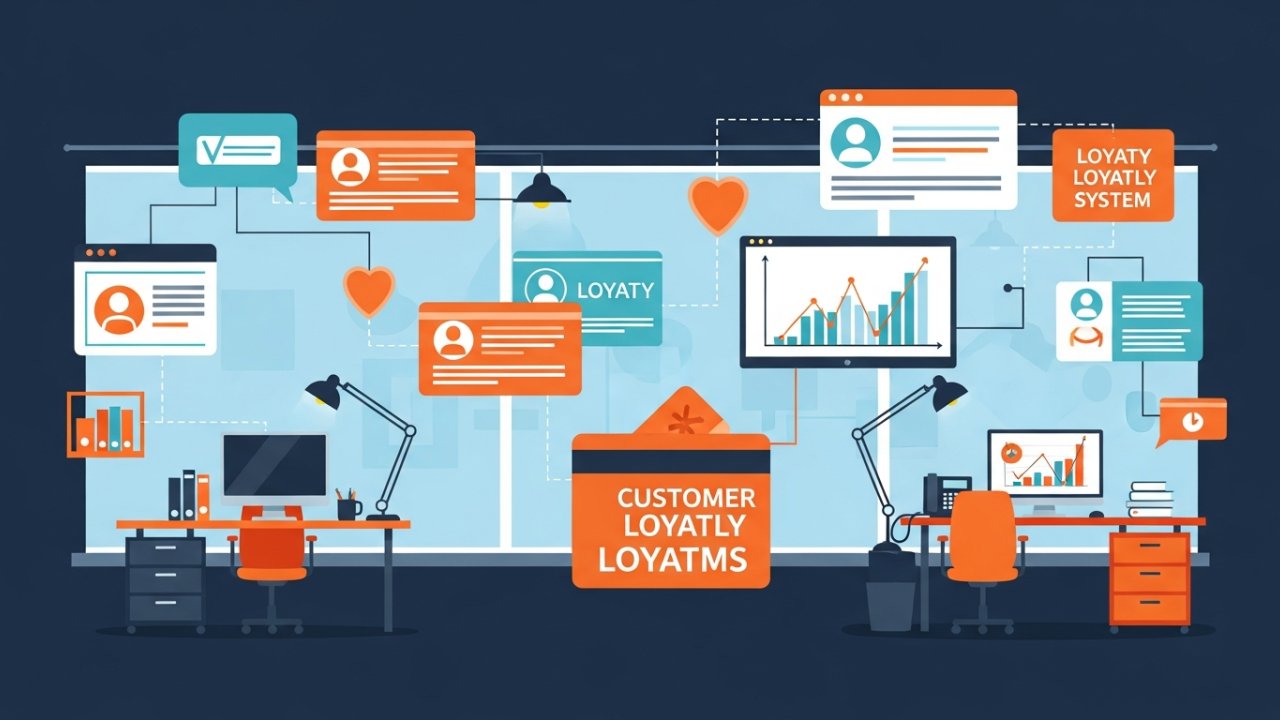
Image via Google Gemini